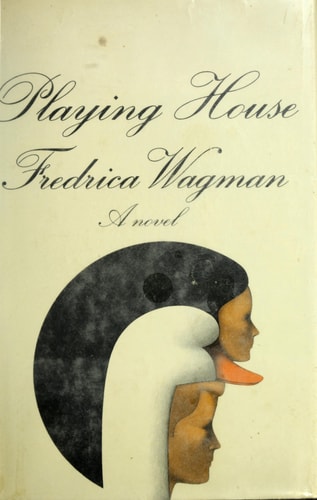
Playing house
0
0
As an Amazon Associate and affiliate partner, Menrva Books earns from qualifying purchases. Learn more
Author Description
When Playing House appeared in 1973, Publishers Weekly hailed it, “A probing descent into madness that will fascinate the same audience that appreciated I Never Promised You a Rose Garden.” This nationally bestselling story of one woman’s struggle with the lasting effects of a childhood sexual relationship with her brother shocked American readers; it remains a literary work of enduring quality and value. In his foreword Philip Roth writes, “The traumatized child; the institutionalized wife; the haunting desire; the ghastly business of getting through the day – what is striking about Wagman’s treatment of these contemporary motifs is the voice of longing in which the heroine shamelessly confesses to the incestuous need that is at once her undoing and her only hope.”
Menrva's Summary
THE PULSE
A woman navigates the fractured reality of her adult life while grappling with the persistent, haunting echoes of a childhood sexual relationship with her brother. The protagonist attempts to reconcile her current institutionalized existence with the memories of her past, seeking to understand the origins of her psychological unraveling. She faces the internal opposition of her own repressed desires and the external constraints of a society and medical system that struggle to categorize her experience. The narrative framework utilizes a confessional, introspective voice that blurs the lines between memory and present-day perception. Her objective is to find a sense of coherence amidst the wreckage of her history, even as that history remains the primary source of her instability.
INSIDE THE PAGES
- Introspective, first-person narrative voice
- Exploration of the long-term psychological impact of childhood trauma
- Non-linear progression of memory and reality
- Focus on the isolation inherent in institutionalization
- Examination of the complex, often destructive nature of familial bonds
- Candid depiction of internal longing and shame
- Stylistic emphasis on the subjective experience of madness
- Minimalist approach to external plot in favor of internal character development
THE COLLECTIVE ECHO
Discussion often centers on the raw, uncompromising nature of the protagonist's internal monologue as she confronts her past. Readers frequently highlight the book's ability to maintain a sense of unease through its focused, claustrophobic atmosphere. Critics have noted the stylistic parallels to other mid-century psychological narratives that examine the fragility of the human psyche under extreme duress. The work is often cited for its willingness to address taboo subjects with a directness that challenges the reader's comfort levels. Many discussions emphasize the effectiveness of the author's voice in portraying the cyclical nature of trauma and the difficulty of achieving genuine resolution.
Page Count:
165
Publication Date:
1973-01-01
Publisher:
Holt, Rinehart and Winston
ISBN-10:
003007746X
ISBN-13:
9780030077463
Literary Fiction
Contemporary
Trauma
Family Drama
Literary
Psychological