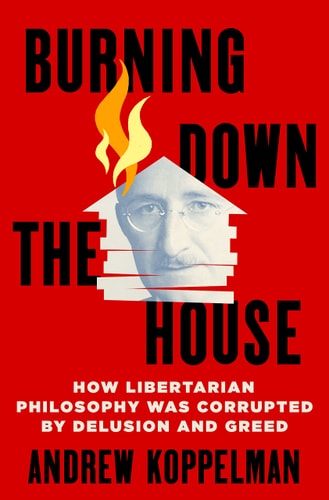
Burning Down the House: How Libertarian Philosophy Was Corrupted by Delusion and Greed
0
0
As an Amazon Associate and affiliate partner, Menrva Books earns from qualifying purchases. Learn more
Author Description
A lively history of American libertarianism and its decay into dangerous fantasy. In 2010 in South Fulton, Tennessee, each household paid the local fire department a yearly fee of $75.00. That year, Gene Cranick's house accidentally caught fire. But the fire department refused to come because Cranick had forgotten to pay his yearly fee, leaving his home in ashes. Observers across the political spectrum agreed—some with horror and some with enthusiasm—that this revealed the true face of libertarianism. But libertarianism did not always require callous indifference to the misfortunes of others. Modern libertarianism began with Friedrich Hayek’s admirable corrective to the Depression-era vogue for central economic planning. It resisted oppressive state power. It showed how capitalism could improve life for everyone. Yet today, it's a toxic blend of anarchism, disdain for the weak, and rationalization for environmental catastrophe. Libertarians today accept new, radical arguments—which crumble under scrutiny—that justify dishonest business practices and Covid deniers who refuse to wear masks in the name of “freedom.” Andrew Koppelman’s book traces libertarianism's evolution from Hayek’s moderate pro-market ideas to the romantic fabulism of Murray Rothbard, Robert Nozick, and Ayn Rand, and Charles Koch’s promotion of climate change denial. Burning Down the House is the definitive history of an ideological movement that has reshaped American politics.
Menrva's Summary
THE THESIS
This book investigates how libertarian philosophy in America has devolved from its principled origins into a dangerous and self-serving ideology. Andrew Koppelman, a professor of law and political science, traces this transformation from the moderate pro-market ideas of Friedrich Hayek to the radical stances of figures like Murray Rothbard, Robert Nozick, Ayn Rand, and Charles Koch. The book examines how contemporary libertarianism has embraced arguments that justify unethical business practices and denial of scientific consensus, particularly concerning climate change and public health crises like COVID-19. It argues that this evolution represents a corruption of the movement's core tenets, leading to a callous indifference to societal well-being and the vulnerable.
THE SCOPE MAP
- A historical account of American libertarianism, beginning with Friedrich Hayek.
- Analysis of key libertarian thinkers including Murray Rothbard, Robert Nozick, and Ayn Rand.
- Examination of Charles Koch's role in promoting climate change denial within the movement.
- Critique of modern libertarian arguments justifying dishonest business practices and public health skepticism.
- Case studies illustrating the perceived negative consequences of extreme libertarian policies, such as the South Fulton fire department incident.
- An argument for the corruption of libertarian philosophy by delusion and greed.
THE AUTHORITY PERSPECTIVE
The book is presented as a definitive history of the libertarian movement's ideological shift, critiquing its modern manifestations. The narrative highlights a stark contrast between early libertarian ideals focused on resisting state power and improving lives, and contemporary interpretations that rationalize environmental catastrophe and disregard for the vulnerable. The author's analysis suggests that these radical arguments, particularly those concerning business ethics and public health, crumble under scrutiny. The book aims to expose how libertarianism has been reshaped by what the author terms delusion and greed.
Page Count:
320
Publication Date:
2022-10-04
Publisher:
St. Martin's Publishing Group
ISBN-10:
1250280133
ISBN-13:
9781250280138
Politics
History
Non-Fiction
Philosophy
Social Science
Social Commentary