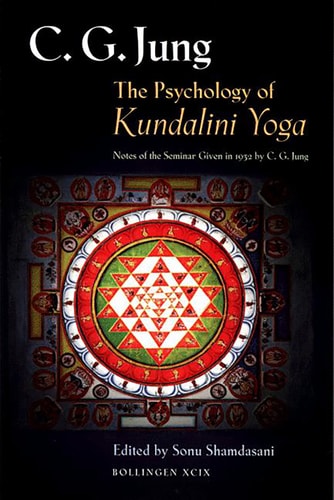
The Psychology of Kundalini Yoga: Notes of the Seminar Given in 1932
0
0
As an Amazon Associate and affiliate partner, Menrva Books earns from qualifying purchases. Learn more
Author Description
Kundalini yoga presented Jung with a model of something that was almost completely lacking in Western psychology--an account of the development phases of higher consciousness.... Jung's insistence on the psychogenic and symbolic significance of such states is even more timely now than then. As R. D. Laing stated... 'It was Jung who broke the ground here, but few followed him.'--From the introduction by Sonu Shamdasani Jung's seminar on Kundalini yoga, presented to the Psychological Club in Zurich in 1932, has been widely regarded as a milestone in the psychological understanding of Eastern thought and of the symbolic transformations of inner experience. Kundalini yoga presented Jung with a model for the developmental phases of higher consciousness, and he interpreted its symbols in terms of the process of individuation. With sensitivity toward a new generation's interest in alternative religions and psychological exploration, Sonu Shamdasani has brought together the lectures and discussions from this seminar. In this volume, he re-creates for today's reader the fascination with which many intellectuals of prewar Europe regarded Eastern spirituality as they discovered more and more of its resources, from yoga to tantric texts. Reconstructing this seminar through new documentation, Shamdasani explains, in his introduction, why Jung thought that the comprehension of Eastern thought was essential if Western psychology was to develop. He goes on to orient today's audience toward an appreciation of some of the questions that stirred the minds of Jung and his seminar group: What is the relation between Eastern schools of liberation and Western psychotherapy? What connection is there between esoteric religious traditions and spontaneous individual experience? What light do the symbols of Kundalini yoga shed on conditions diagnosed as psychotic? Not only were these questions important to analysts in the 1930s but, as Shamdasani stresses, they continue to hav
Menrva's Summary
THE THESIS
This seminar explores the symbolic and developmental significance of Kundalini yoga within the framework of Western psychology. C. G. Jung, a pioneering figure in analytical psychology, presented his interpretations of Kundalini yoga to the Psychological Club in Zurich in 1932. He viewed its symbols as a model for the phases of higher consciousness and the process of individuation, offering a perspective largely absent in Western thought. Sonu Shamdasani has meticulously reconstructed this seminar, highlighting its relevance to contemporary interests in alternative religions and psychological exploration, and emphasizing the essential connection between Eastern thought and Western psychotherapy.
THE SCOPE MAP
- Jung's interpretation of Kundalini yoga symbols in relation to the individuation process.
- Analysis of Eastern spiritual traditions and their connection to Western psychotherapy.
- Exploration of esoteric religious traditions and spontaneous individual experience.
- Discussion on how Kundalini yoga symbols can illuminate conditions diagnosed as psychotic.
- The historical context of prewar European intellectuals' engagement with Eastern spirituality.
- Shamdasani's introduction explaining the necessity of understanding Eastern thought for Western psychology.
THE AUTHORITY PERSPECTIVE
Sonu Shamdasani's reconstruction of C. G. Jung's 1932 seminar on Kundalini yoga is regarded as a significant contribution to the psychological understanding of Eastern thought. The work is noted for its timely re-examination of Jung's insights into higher consciousness and individuation, particularly relevant in an era of increasing interest in alternative spiritual and psychological practices. Shamdasani's introduction provides crucial context, explaining why Jung considered Eastern thought essential for the development of Western psychology and posing enduring questions about the relationship between Eastern and Western approaches to the mind. The seminar's exploration of symbolic transformations and its potential to shed light on psychological conditions continues to resonate with contemporary scholars and practitioners.
Page Count:
192
Publication Date:
2012-01-12
Publisher:
Princeton University Press
ISBN-10:
1400821916
ISBN-13:
9781400821914
Philosophy
Spirituality
Self-help
Psychology
Non-Fiction
Community Tags
Similar Books












Reader Comments
Share Your Thoughts
No comments yet. Be the first to share your thoughts!