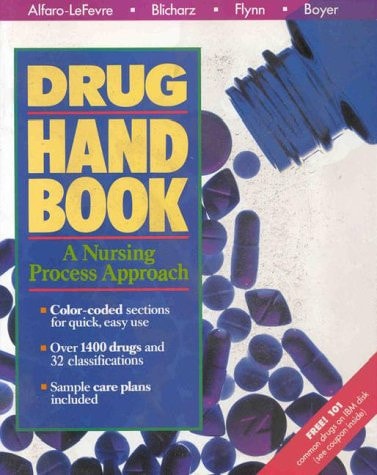
Drug Handbook: A Nursing Process Approach
0
0
As an Amazon Associate and affiliate partner, Menrva Books earns from qualifying purchases. Learn more
Author Description
Practicing nurses use drug handbooks as a source for quick reference in the clinical setting. A handbook is used many times daily by student nurses during the clinical learning experience and by practicing nurses to validate generic and trade-name medications, doses, and side effects. A readily available and easily carried drug handbook is a necessity for the home-care nurse. This handbook is a helpful reference to all student, clinical, and home-care nurses. Some of the features of the handbook include nursing-process applications, sample care plans, drug classification overviews, precaution grids for each drug, outcome criteria, and patient and family teaching.
Menrva's Summary
THE THESIS
This handbook addresses the clinical requirement for a portable, efficient, and accurate reference tool for nurses to manage medication administration and patient safety. The author, Rosalinda Alfaro-Lefevre, leverages her expertise in nursing process methodology to bridge the gap between pharmacological data and bedside application. By integrating drug information with clinical care planning, the text provides a framework that supports both student learning and the daily decision-making needs of practicing professionals.
THE SCOPE MAP
What You Will Find
- Comprehensive drug classification overviews for quick identification
- Nursing process applications integrated into medication management
- Precaution grids designed for rapid clinical validation
- Sample care plans and patient teaching criteria for holistic care
THE AUTHORITY PERSPECTIVE
Experts and clinical educators frequently cite this text as a practical resource for bridging the gap between theoretical pharmacology and real-world patient care. Readers often note the utility of the nursing process framework in helping students and professionals organize their clinical documentation and patient education efforts.
Page Count:
790
Publication Date:
1992-01-01
Publisher:
Addison-Wesley
ISBN-10:
0201092786
ISBN-13:
9780201092783
Medical
Nursing
Pharmacology
textbook
Reference
Community Tags
Similar Books