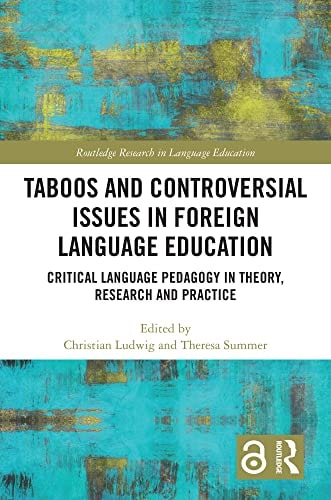
Taboos and Controversial Issues in Foreign Language Education: Critical Language Pedagogy in Theory, Research and Practice
0
0
As an Amazon Associate and affiliate partner, Menrva Books earns from qualifying purchases. Learn more
Author Description
Taboos are not a new phenomenon. Yet, taboos change over time as social customs change, discard old taboos, and create new ones. What does not change, however, is how taboos regulate the way in which we live together in different communities and how they influence our behaviours. Notwithstanding the ubiquity of all sorts of taboos in daily life, many of them do not seem to find their way into foreign language classrooms easily. This is particularly surprising if we consider the growing importance of critical language pedagogy approaches to foreign language learning. Despite relevant efforts there, teachers, pre-service teachers, and learners often appear to feel discomfort as conversations about controversial issues such as mental illnesses, disabilities, racism, conspiracy theories, violence, and gender unfold. Consequently, classroom materials as well as suitable approaches to these issues in foreign language learning are needed. Taking this as a starting point, this introductory chapter argues for the integration of taboos and controversial topics into the foreign language classroom. It first investigates the concept of critical pedagogy in general and critical (foreign) language pedagogy more specifically. It then discusses taboos in the context of critical language pedagogy, arguing that despite numerous challenges, the foreign language classroom provides the perfect space for discussing some controversial topics with students-primarily by exploring a variety of different texts dealing with taboos instead of personalising a topic, which would be more common in communicative approaches. The chapter closes with a practical framework that provides suggestions for handling taboos in foreign language education.
Menrva's Summary
THE THESIS
This book investigates the integration of taboos and controversial topics into foreign language classrooms, arguing for the necessity of critical language pedagogy in addressing these sensitive subjects. The authors, Christian Ludwig and Theresa Summer, draw upon their expertise to explore the concept of critical pedagogy and its specific application to foreign language learning. They examine the challenges and opportunities presented by discussing topics such as mental illness, disability, racism, conspiracy theories, violence, and gender within the classroom setting, proposing that the foreign language classroom is an ideal space for such discussions through the exploration of diverse texts. The work culminates in a practical framework designed to guide educators in handling these complex issues.
THE SCOPE MAP
- Exploration of the concept of critical pedagogy in general.
- Specific discussion of critical (foreign) language pedagogy.
- Analysis of taboos within the context of critical language pedagogy.
- Argument for integrating taboos and controversial topics into foreign language education.
- Discussion of challenges and benefits of addressing sensitive topics in the classroom.
- Proposal for using diverse texts to explore taboos rather than personalizing topics.
- Presentation of a practical framework for handling taboos in foreign language education.
THE AUTHORITY PERSPECTIVE
This work addresses a critical gap in foreign language education by providing a theoretical and practical framework for discussing sensitive and controversial topics. The authors advocate for a critical pedagogy approach, suggesting that educators can navigate these challenging subjects effectively through text-based exploration. The proposed framework offers concrete strategies for teachers seeking to create inclusive and intellectually stimulating learning environments that acknowledge the complexities of societal taboos.
Page Count:
270
Publication Date:
2023-01-01
Publisher:
Routledge
ISBN-10:
1032116102
ISBN-13:
9781032116105
Self-help
Non-Fiction
Linguistics
Education
Sociology
Community Tags
Similar Books