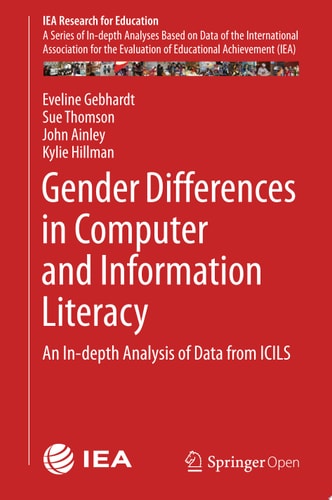
Gender Differences in Computer and Information Literacy: An In-depth Analysis of Data from ICILS
0
0
As an Amazon Associate and affiliate partner, Menrva Books earns from qualifying purchases. Learn more
Author Description
This open access book presents a systematic investigation into internationally comparable data gathered in ICILS 2013. It identifies differences in female and male students’ use of, perceptions about, and proficiency in using computer technologies. Teachers’ use of computers, and their perceptions regarding the benefits of computer use in education, are also analyzed by gender. When computer technology was first introduced in schools, there was a prevailing belief that information and communication technologies were ‘boys’ toys’; boys were assumed to have more positive attitudes toward using computer technologies. As computer technologies have become more established throughout societies, gender gaps in students’ computer and information literacy appear to be closing, although studies into gender differences remain sparse. The IEA’s International Computer and Information Literacy Study (ICILS) is designed to discover how well students are prepared for study, work, and life in the digital age. Despite popular beliefs, a critical finding of ICILS 2013 was that internationally girls tended to score more highly than boys, so why are girls still not entering technology-based careers to the same extent as boys? Readers will learn how male and female studentsdiffer in their computer literacy (both general and specialized) and use of computer technology, and how the perceptions held about those technologies vary by gender.
Menrva's Summary
THE THESIS
This book systematically investigates gender differences in computer and information literacy using data from the ICILS 2013 study. It analyzes how male and female students' use, perceptions, and proficiency with computer technologies differ, and examines teachers' computer use and perceptions by gender. The study addresses the historical belief that computers were 'boys' toys' and explores the closing of gender gaps in computer literacy, despite persistent underrepresentation of girls in technology careers. The research specifically highlights a key ICILS 2013 finding: girls internationally scored higher than boys in computer literacy.
THE SCOPE MAP
- Analysis of internationally comparable data from ICILS 2013.
- Identification of gender differences in students' computer technology use and perceptions.
- Examination of teachers' computer use and perceptions by gender.
- Investigation into the closing of gender gaps in computer and information literacy.
- Exploration of why girls, despite higher scores, are underrepresented in technology careers.
- Detailed findings on general and specialized computer literacy by gender.
- Analysis of gendered perceptions of computer technologies.
THE AUTHORITY PERSPECTIVE
This book offers a detailed, data-driven examination of gender differences in computer literacy, drawing on the comprehensive ICILS 2013 study. It challenges prevailing assumptions by presenting evidence of girls often outperforming boys in computer literacy, while simultaneously probing the reasons for continued gender disparities in technology-related career choices. The research provides valuable insights for educators, policymakers, and anyone interested in understanding the evolving landscape of digital skills and gender in education. The analysis is grounded in rigorous international data, offering a nuanced perspective on a complex and important societal issue.
Page Count:
73
Publication Date:
2019-09-13
Publisher:
Springer Nature
ISBN-10:
3030262030
ISBN-13:
9783030262037
Non-Fiction
Science & Technology
Psychology
Science
Gender Studies
Data Analysis
Education
Research
Technology
Community Tags
Similar Books