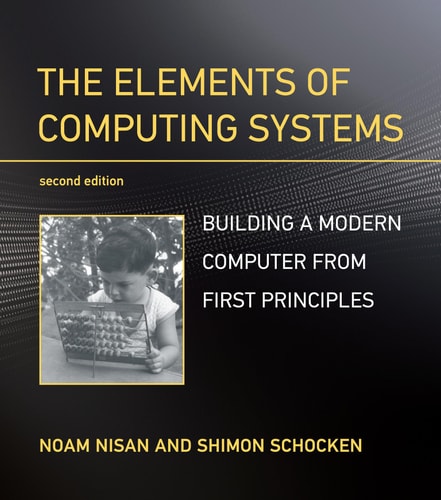
The Elements of Computing Systems: Building a Modern Computer from First Principles
0
0
As an Amazon Associate and affiliate partner, Menrva Books earns from qualifying purchases. Learn more
Author Description
A new and extensively revised edition of a popular textbook used in universities, coding boot camps, hacker clubs, and online courses. The best way to understand how computers work is to build one from scratch, and this textbook leads learners through twelve chapters and projects that gradually build the hardware platform and software hierarchy for a simple but powerful computer system. In the process, learners gain hands-on knowledge of hardware, architecture, operating systems, programming languages, compilers, data structures and algorithms, and software engineering. Using this constructive approach, the book introduces readers to a significant body of computer science knowledge and synthesizes key theoretical and applied techniques into one constructive framework.The outcome is known known as Nand to Tetris: a journey that starts with the most elementary logic gate, called Nand, and ends, twelve projects later, with a general-purpose computer system capable of running Tetris and any other program that comes to your mind. The first edition of this popular textbook inspired Nand to Tetris classes in many universities, coding boot camps, hacker clubs, and online course platforms. This second edition has been extensively revised. It has been restructured into two distinct parts—Part I, hardware, and Part II, software—with six projects in each part. All chapters and projects have been rewritten, with an emphasis on separating abstraction from implementation, and many new sections, figures, and examples have been added. Substantial new appendixes offer focused presentation on technical and theoretical topics.
Menrva's Summary
THE THESIS
This textbook guides learners through building a functional computer system from the ground up, starting with basic logic gates and progressing to a general-purpose computer capable of running complex software. The book is structured into twelve projects, divided into two parts: hardware and software. It emphasizes the separation of abstraction from implementation, providing hands-on experience with computer architecture, operating systems, programming languages, compilers, data structures, algorithms, and software engineering.
THE SCOPE MAP
- Part I: Hardware
- Projects covering logic gates, computer architecture, and basic hardware components.
- Part II: Software
- Projects focusing on software hierarchy, including programming languages, compilers, and operating systems.
- Constructive approach: Learners build a computer system incrementally, gaining practical knowledge.
- Key concepts covered: Hardware, architecture, operating systems, programming languages, compilers, data structures, algorithms, and software engineering.
- The Nand to Tetris framework: A unified approach to understanding computer science principles.
- Extensively revised second edition with rewritten chapters and projects, new sections, figures, and examples.
- Substantial new appendixes offering focused technical and theoretical content.
THE AUTHORITY PERSPECTIVE
This second edition of 'The Elements of Computing Systems' has been extensively revised and restructured, building upon the success of the first edition which inspired numerous courses worldwide. The new edition emphasizes a clearer separation of abstraction from implementation, with rewritten chapters and projects designed to enhance learner understanding. The inclusion of new sections, figures, and examples, along with substantial appendixes, aims to provide a more comprehensive and accessible learning experience for students across various educational settings.
Page Count:
344
Publication Date:
2021-06-15
Publisher:
MIT Press
ISBN-10:
0262539802
ISBN-13:
9780262539807
Science & Technology
Non-Fiction
Algorithms
Computer Science
Software Engineering
Compilers
Computer Architecture
Community Tags
Similar Books