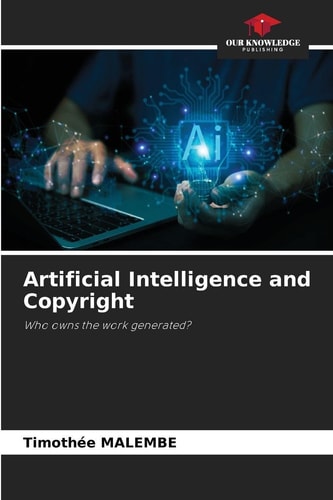
Artificial Intelligence and Copyright
0
0
As an Amazon Associate and affiliate partner, Menrva Books earns from qualifying purchases. Learn more
Author Description
This book offers an in-depth analysis of the impact of artificial intelligence, and more specifically generative artificial intelligence, on copyright in the Democratic Republic of Congo. Using an exegetical, sociological and comparative approach, it highlights the limits of a legal framework inherited from the 1986 ordinance-law, centered on human creation, in the face of new technological realities. The study questions the notion of originality, authorship and the attribution of rights when a work is produced by an autonomous algorithmic system. It explores several hypotheses, in particular the identification of the designer or user, or the adoption of alternative solutions based on contractual or sui generis regimes. This work demonstrates the urgent need for appropriate normative reform to reconcile technological innovation and the safeguarding of creators' rights, while preserving the balance between scientific progress and the protection of the fundamental values of copyright.
Menrva's Summary
THE THESIS
This book investigates the complex intersection of artificial intelligence and copyright law, particularly within the Democratic Republic of Congo. The study examines the limitations of existing legal frameworks, established in 1986 and centered on human creation, when confronted with the realities of generative AI. It scrutinizes core copyright concepts such as originality, authorship, and rights attribution in the context of works produced by autonomous algorithmic systems. The author explores potential solutions, including identifying the designer or user, or implementing contractual or sui generis regimes, to address the urgent need for normative reform.
THE SCOPE MAP
- Analysis of generative artificial intelligence's impact on copyright law.
- Focus on the legal landscape of the Democratic Republic of Congo.
- Examination of the 1986 ordinance-law and its limitations.
- In-depth exploration of the notion of originality in AI-generated works.
- Discussion on authorship and rights attribution for algorithmic creations.
- Hypotheses regarding the identification of AI designers or users.
- Consideration of alternative legal solutions like contractual or sui generis regimes.
- Argument for urgent normative reform to balance innovation and creator rights.
THE AUTHORITY PERSPECTIVE
The book presents a detailed legal and sociological analysis of artificial intelligence's impact on copyright in the Democratic Republic of Congo. It highlights the inadequacy of current legislation, designed for human-created works, in addressing the challenges posed by generative AI. The work proposes potential legal avenues for attributing authorship and rights to AI-generated content, advocating for timely legislative reform. This study aims to reconcile technological advancement with the protection of creators' rights.
Page Count:
72
Publication Date:
2025-10-30
Publisher:
Our Knowledge Publishing
ISBN-10:
620921763X
ISBN-13:
9786209217630
Economics
Science & Technology
Non-Fiction
Politics
African Law
Intellectual Property
Law
Copyright
Technology
Technology Law
Community Tags
Similar Books