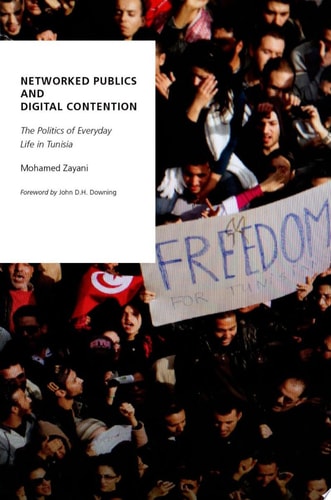
Networked Publics and Digital Contention: The Politics of Everyday Life in Tunisia
0
0
As an Amazon Associate and affiliate partner, Menrva Books earns from qualifying purchases. Learn more
Author Description
How is the adoption of digital media in the Arab world affecting the relationship between the state and its subjects? What new forms of online engagement and strategies of resistance have emerged from the aspirations of digitally empowered citizens in the Middle East and North Africa? Networked Publics and Digital Contention narrates the story of the co-evolution of technology and society in Tunisia, the birthplace of the Arab uprisings. It explores the emergence of a digital culture of contention that helped networked publics negotiate their lived reality, reconfigure power relations, and ultimately redefine the locus of politics. It broadens the focus from narrow debates about the role that social media played in the Arab uprisings toward a fresh understanding of how changes in media affect the state-society relationship over time. Based on extensive fieldwork, in-depth interviews with Internet activists, and immersive analyses of online communication, this book draws our attention away from the tools of political communication and refocuses it on the politics of communication. An original contribution to the political sociology of media, Networked Publics and Digital Contention provides a unique perspective on how networked Arab publics reimagine citizenship, reinvent politics, and produce change.
Menrva's Summary
THE THESIS
This book investigates how the adoption of digital media in Tunisia has fundamentally altered the relationship between the state and its citizens, specifically examining the emergence of a digital culture of contention. Mohamed Zayani, a scholar specializing in media and politics, utilizes extensive fieldwork and in-depth interviews with Tunisian internet activists to construct his argument. He posits that the evolution of digital technology and social structures in the region has redefined the locus of politics, moving beyond simple debates about social media's role in uprisings to a broader analysis of the politics of communication.
THE SCOPE MAP
What You Will Find
- Analysis of the co-evolution of digital technology and Tunisian society
- Examination of how networked publics reconfigure power relations
- Qualitative data derived from immersive fieldwork and interviews with activists
- Theoretical framework for the political sociology of media
Scope Limits
- The study focuses primarily on the Tunisian context rather than providing a comprehensive survey of the entire Arab world
- The analysis prioritizes the long-term state-society relationship over immediate tactical uses of social media tools
THE AUTHORITY PERSPECTIVE
Scholars and political analysts frequently cite this work as a significant contribution to the political sociology of media for its focus on the long-term impacts of digital culture. Experts highlight the text for its shift away from technological determinism toward a more nuanced understanding of how citizens actively negotiate power through digital platforms.
Page Count:
294
Publication Date:
2015-09-02
Publisher:
Oxford University Press
ISBN-10:
019023976X
ISBN-13:
9780190239763
Civics & Citizenship
Social Media
Political Activity
Tunisia
Technology and Society
Digital Media
Middle Eastern
Sociology
Community Tags
Other Editions(2)
Similar Books