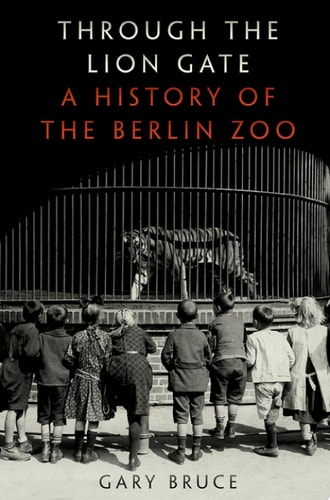
Through the Lion Gate: A History of the Berlin Zoo
0
0
As an Amazon Associate and affiliate partner, Menrva Books earns from qualifying purchases. Learn more
Author Description
In 1943, fierce aerial bombardment razed the Berlin zoo and killed most of its animals. But only two months after the war's end, Berliners had already resurrected it, reopening its gates and creating a symbol of endurance in the heart of a shattered city. As this episode shows, the Berlin zoo offers one of the most unusual--yet utterly compelling--lenses through which to view German history. This enormously popular attraction closely mirrored each of the political systems under which it existed: the authoritarian monarchy of the kaiser, the Weimar Republic, Nazi Germany, and the post-1945 democratic and communist states.Gary Bruce provides the first English-language history of the Berlin zoo, from its founding in 1844 until the 1990 unification of the West Berlin and East Berlin zoos. At the center of the capital's social life, the Berlin zoo helped to shape German views not only of the animal world but also of the human world for more than 150 years. Given its enormous reach, the German government used the zoo to spread its political message, from the ethnographic display of Africans, Inuit, and other "exotic" peoples in the late nineteenth century to the Nazis' bizarre attempts to breed back long-extinct European cattle.By exploring the intersection of zoology, politics, and leisure, Bruce shows why the Berlin zoo was the most beloved institution in Germany for so long: it allowed people to dream of another place, far away from an often grim reality. It is not purely coincidence that the profound connection of Berliners to their zoo intensified through the bloody twentieth century. Its exotic, iconic animals--including Rostom the elephant, Knautschke the hippo, and Evi the sun bear--seemed to satisfy, even partially, a longing for a better, more tranquil world.
Menrva's Summary
THE THESIS
How did the Berlin Zoo function as a mirror for the shifting political landscapes of Germany from the mid-nineteenth century through the late twentieth century? Gary Bruce, a historian specializing in modern German history, utilizes the zoo as a unique institutional lens to examine the intersection of leisure, zoology, and state ideology. By analyzing archival records and public engagement, he argues that the zoo served as both a tool for political messaging and a vital sanctuary for the public during periods of national trauma.
THE SCOPE MAP
What You Will Find
- A chronological history of the Berlin Zoo from its founding in 1844 to the 1990 reunification.
- Analysis of the zoo's role under the Kaiser, the Weimar Republic, the Nazi regime, and the divided post-war states.
- Examination of controversial practices, including ethnographic displays and Nazi-era breeding experiments.
Scope Limits
- The text does not provide an exhaustive biological study of the animals themselves.
- The narrative focus is primarily on the institutional and political history rather than the daily operational logistics of modern zookeeping.
THE AUTHORITY PERSPECTIVE
Historians and scholars of German culture identify this work as a significant contribution to the study of public institutions in authoritarian and democratic regimes. Readers frequently note the accessibility of the prose despite the academic rigor applied to the historical analysis.
Page Count:
315
Publication Date:
2017-01-01
Publisher:
Oxford University Press
ISBN-10:
0190235004
ISBN-13:
9780190235000
History
Non-Fiction
European History
Zoos
Urban History
Zoology
German history
Berlin Germany
Modern History
Military History
Community Tags
Similar Books