
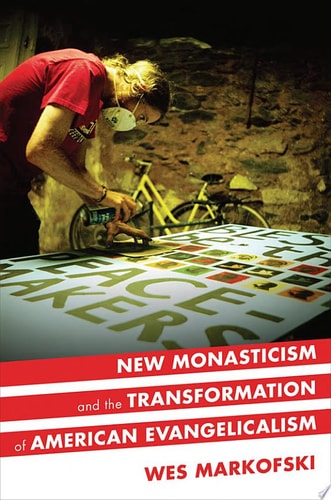
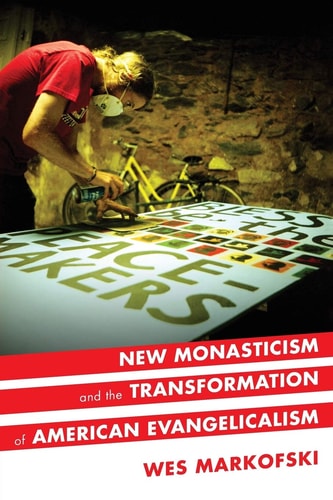
New Monasticism and the Transformation of American Evangelicalism
0
0
As an Amazon Associate and affiliate partner, Menrva Books earns from qualifying purchases. Learn more
Author Description
For most of the last century, popular and scholarly common sense has equated American evangelicalism with across-the-board social, economic, and political conservatism. However, if a growing chorus of evangelical leaders, media pundits, and religious scholars is to be believed, the era of uncontested evangelical conservatism is on the brink of collapse-if it hasn't collapsed already. Combining vivid ethnographic storytelling and incisive theoretical analysis, New Monasticism and the Transformation of American Evangelicalism introduces readers to the fascinating and unexplored terrain of neo-monastic evangelicalism. Often located in disadvantaged urban neighborhoods, new monastic communities pursue religiously inspired visions of racial, social, and economic justice-alongside personal spiritual transformation-through diverse and creative expressions of radical community.In this account, Wes Markofski has immersed himself in the paradoxical world of evangelical neo-monasticism, focusing on the Urban Monastery-an influential neo-monastic community located in a gritty, racially diverse neighborhood in a major Midwestern American city. The resulting account of the way in which this movement reflects and is contributing to the transformation of American evangelicalism challenges entrenched stereotypes and calls attention to the dynamic diversity of religious and political points of view which vie for supremacy in the American evangelical subculture. New Monasticism and the Transformation of American Evangelicalism is the first sociological analysis of new monastic evangelicalism and the first major work to theorize the growing theological and political diversity within twenty-first-century American evangelicalism.
Menrva's Summary
THE THESIS
This book investigates how the emergence of neo-monastic evangelical communities challenges the traditional association between American evangelicalism and political conservatism. Author Wes Markofski, a sociologist, utilizes ethnographic research and theoretical analysis to examine how these communities integrate social justice, racial reconciliation, and spiritual practice within urban environments. He argues that this movement represents a significant shift in the theological and political landscape of twenty-first-century American religious life.
THE SCOPE MAP
What You Will Find
- Ethnographic study of the Urban Monastery in a Midwestern American city
- Analysis of the intersection between radical community living and evangelical theology
- Examination of shifting political and social priorities within evangelical subcultures
Scope Limits
- The study focuses primarily on one specific urban community as a case study
- It does not provide an exhaustive survey of all evangelical denominations or global movements
THE AUTHORITY PERSPECTIVE
Scholars and sociologists recognize this work as a foundational text for understanding the diversification of modern American evangelicalism. Readers frequently note the academic rigor of the ethnographic approach, which provides a nuanced look at religious subcultures that defy conventional political categorization.
Page Count:
378
Publication Date:
2015-06-30
Publisher:
Oxford University Press
ISBN-10:
0190236493
ISBN-13:
9780190236496
Religion
Religious Life
Social justice
Christianity
Evangelicalism
American Studies
Sociology
Community Tags
Other Editions(4)

Similar Books







Reader Comments
Share Your Thoughts
No comments yet. Be the first to share your thoughts!