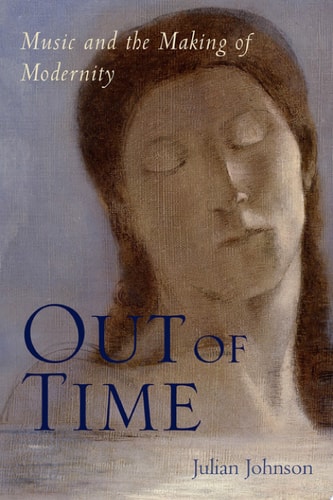
Out of Time: Music and the Making of Modernity
0
0
As an Amazon Associate and affiliate partner, Menrva Books earns from qualifying purchases. Learn more
Author Description
What does music have to say about modernity? How can this apparently unworldly art tell us anything about modern life? In Out of Time, author Julian Johnson begins from the idea that it can, arguing that music renders an account of modernity from the inside, a history not of events but of sensibility, an archaeology of experience. If music is better understood from this broad perspective, our idea of modernity itself is also enriched by the specific insights of music. The result is a rehearing of modernity and a rethinking of music - an account that challenges ideas of linear progress and reconsiders the common concerns of music, old and new.If all music since 1600 is modern music, the similarities between Monteverdi and Schoenberg, Bach and Stravinsky, or Beethoven and Boulez, become far more significant than their obvious differences. Johnson elaborates this idea in relation to three related areas of experience - temporality, history and memory; space, place and technology; language, the body, and sound. Criss-crossing four centuries of Western culture, he moves between close readings of diverse musical examples (from the madrigal to electronic music) and drawing on the history of science and technology, literature, art, philosophy, and geography. Against the grain of chronology and the usual divisions of music history, Johnson proposes profound connections between musical works from quite different times and places. The multiple lines of the resulting map, similar to those of the London Underground, produce a bewildering network of plural connections, joining Stockhausen to Galileo, music printing to sound recording, the industrial revolution to motivic development, steam trains to waltzes. A significant and groundbreaking work, Out of Time is essential reading for anyone interested in the history of music and modernity.
Menrva's Summary
THE THESIS
This book investigates how music functions as an internal account of modernity, challenging traditional linear histories by treating all Western music since 1600 as a unified modern phenomenon. Julian Johnson, a scholar of musicology, utilizes a multidisciplinary framework that integrates music history with philosophy, science, and technology. He argues that by examining music through the lenses of temporality, space, and the body, one can uncover profound connections between disparate eras and composers that transcend conventional chronological boundaries.
THE SCOPE MAP
What You Will Find
- A comparative analysis of Western music from the 17th century to the present.
- A thematic framework organized around temporality, history, memory, space, place, and technology.
- Interdisciplinary connections between musical development and broader cultural shifts like the industrial revolution and the history of science.
Scope Limits
- The analysis is strictly confined to the tradition of Western art music and does not address non-Western musical systems.
- The work prioritizes conceptual and thematic linkages over a comprehensive chronological survey of musical styles.
THE AUTHORITY PERSPECTIVE
Scholars and musicologists frequently cite this text for its ambitious attempt to bridge the gap between musicology and cultural theory. Readers often note the academic density of the prose, which requires a strong background in both music history and philosophical discourse to fully navigate.
Page Count:
400
Publication Date:
2015-01-01
Publisher:
Oxford University Press
ISBN-10:
019023329X
ISBN-13:
9780190233297
Music
Modernity
Musicology
Music History
Music theory
Philosophy of
Humanities
Criticism history
Community Tags
Similar Books