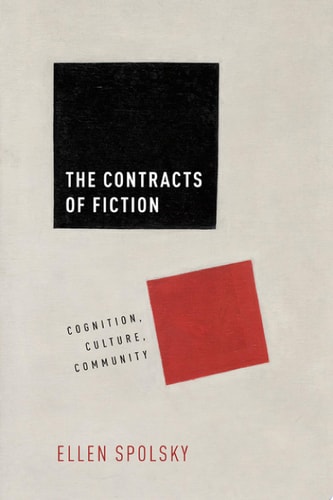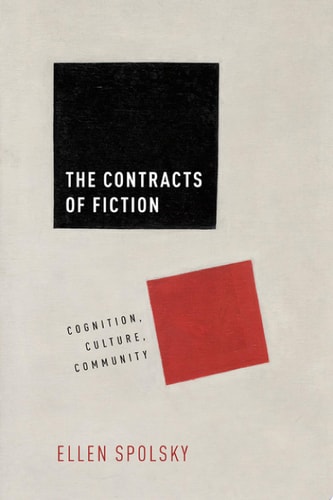
The Contracts of Fiction
0
0
As an Amazon Associate and affiliate partner, Menrva Books earns from qualifying purchases. Learn more
Author Description
The Contracts Of Fiction Reconnects Our Fictional Worlds To The Rest Of Our Lives. Countering The Contemporary Tendency To Dismiss Works Of Imagination As Enjoyable But Epistemologically Inert, The Book Considers How Various Kinds Of Fictions Construct, Guide, And Challenge Institutional Relationships Within Social Groups. The Contracts Of Fiction, Like The Contracts Of Language, Law, Kinship, And Money, Describe The Rules By Which Members Of A Group Toggle Between Tokens And Types, Between Their Material Surroundings - The Stuff Of Daily Life - And The Abstractions That Give It Value. Rethinking Some Familiar Literary Concepts Such As Genre And Style From The Perspective Of Recent Work In The Biological, Cognitive, And Brain Sciences, The Book Displays How Fictions Engage Bodies And Minds In Ways That Help Societies Balance Continuity And Adaptability. Being Part Of A Community Means Sharing The Ways Its Members Use Stories, Pictures, Plays And Movies, Poems And Songs, Icons And Relics, To Generate Usable Knowledge About The People, Objects, Beliefs And Values In Their Environment. Exposing The Underlying Structural And Processing Homologies Among Works Of Imagination And Life Processes Such As Metabolism And Memory, Ellen Spolsky Demonstrates The Seamless Connection Of Life To Art By Revealing The Surprising Dependence Of Both On Disorder, Imbalance, And Uncertainty. In Early Modern London, For Example, Reformed Religion, Expanding Trade, And Changed Demographics Made The Obsolescent Courts A Source Of Serious Inequities. Just At That Time, However, A Flood Of Wildly Popular Revenge Tragedies, Such As Hamlet, By Their Very Form, By Their Outrageous Theatrical Grotesques, Were Shouting The Need For Change In The Justice System. A Sustained Discussion Of The Genre Illustrates How Biological Homeostasis Underpins The Social Balance That We Maintain With Difficulty, And How Disorder Itself Incubates New Understanding.
Menrva's Summary
THE THESIS
This book investigates how works of imagination function as essential cognitive and social tools that help societies manage the tension between continuity and adaptability. Ellen Spolsky, a scholar in literature and cognitive science, utilizes a framework that bridges the gap between biological processes—such as metabolism and memory—and the structural mechanics of storytelling. By analyzing how fictions operate similarly to institutional contracts like law or money, she argues that art is not merely an aesthetic diversion but a vital mechanism for generating usable knowledge within a community.
THE SCOPE MAP
What You Will Find
- Analysis of the structural homologies between narrative forms and biological homeostasis.
- Examination of how genre and style function as cognitive tools for social navigation.
- Case studies of Early Modern London, specifically focusing on revenge tragedies like Hamlet.
- Theoretical synthesis of cognitive science, brain science, and literary theory.
Scope Limits
- The text does not provide a comprehensive history of all literary genres.
- It does not offer a practical guide for creative writing or literary composition.
THE AUTHORITY PERSPECTIVE
Scholars and readers often note the high level of academic density in Spolsky's prose, which requires familiarity with both literary theory and cognitive science. Experts highlight this work as a significant contribution to the field of cognitive literary studies, particularly for its focus on how art interacts with biological and social systems.
Page Count:
336
Publication Date:
2015-01-01
Publisher:
Oxford University Press, Incorporated
ISBN-10:
0190232153
ISBN-13:
9780190232153
Philosophy
Non-Fiction
Fiction
Sociology
In literature
Literary Criticism