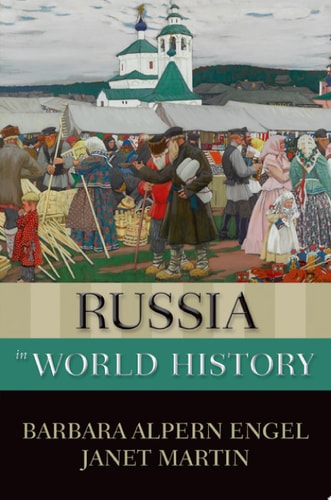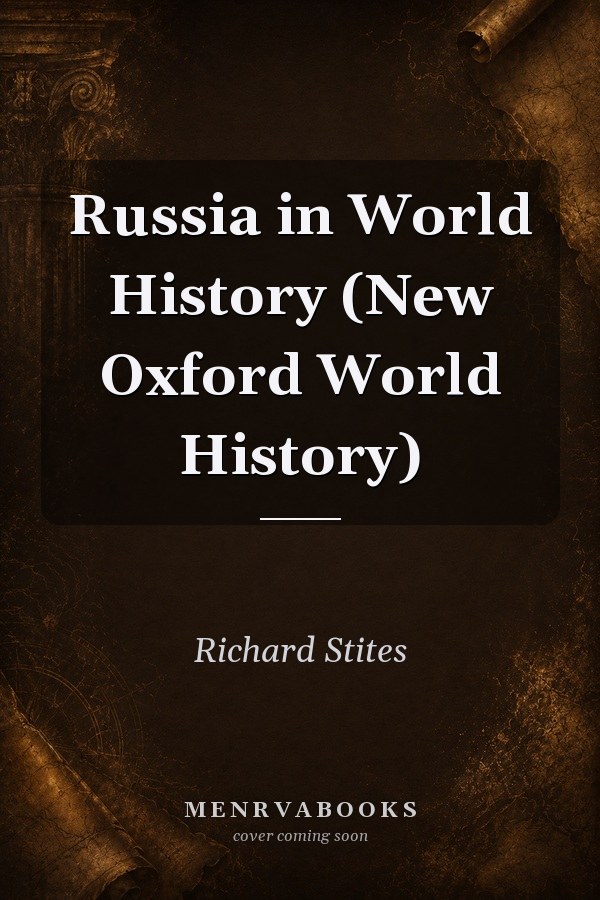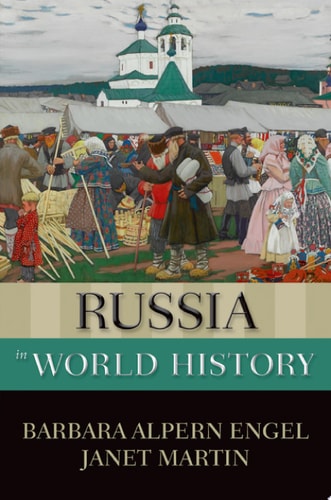
Russia In World History
0
0
As an Amazon Associate and affiliate partner, Menrva Books earns from qualifying purchases. Learn more
Author Description
Over The Course Of Twelve Centuries, Russia's Peoples Overcame The Constant Challenges Posed By Geography, Climate, Availability Of Natural Resources, And Devastating Foreign Invasions To Become The World's Second Largest Land Empire And The Largest In Modern History. This Energetic Introduction To Russia's History Follows The Development Of Local Tribes Into A Federation Of Principalities Centered At Kiev, The Shift Of Power To Moscow And The Centralization Of The State, And Russia's Pursuit Of Imperial Ambitions. It Examines The Circumstances That Led To The Foundation Of The World's First Communist Society In 1917, And Traces The Global Consequences Of Russia's Extensive Confrontation With The United States. Russia's Arduous And Costly Climb To Great Power Gains A Personal Dimension Through The Stories Of Individual Women And Men-pivotal Figures As Well As Common People-illuminating The Human Consequences Of Sweeping Historical Change. Peoples Of Many Ethnicities Became Part Of The Russian Empire And Suffered Or Benefitted From Its Leaders' Efforts To Meld A Multiethnic Polity Into A Coherent Political Entity. This Book Examines How Russia Served As A Conduit For People, Ideas, And Commodities - Owing Between East And West, North And South And How It Came To Play An Increasingly Important Role On A Global Scale.
Menrva's Summary
THE THESIS
This book investigates how Russia evolved from a collection of local tribes into a global power while navigating geographic constraints and internal political shifts over twelve centuries. Barbara Alpern Engel and Janet Martin utilize a synthesis of historical data and biographical accounts to frame Russia's development as a complex interaction between state centralization and the diverse experiences of its multiethnic population. The authors argue that Russia's trajectory is defined by its role as a conduit for global exchange and its persistent efforts to consolidate a coherent political entity across vast territories.
THE SCOPE MAP
What You Will Find
- A chronological overview of Russian history from the Kievan Rus period to the modern era.
- Analysis of the transition from imperial ambition to the establishment of the Soviet Union.
- Integration of personal narratives from both historical figures and common citizens.
Scope Limits
- The text provides a broad survey and does not offer exhaustive detail on every specific regional conflict or minor political event.
THE AUTHORITY PERSPECTIVE
Historians and educators frequently cite this work as a balanced, accessible introduction for students seeking to understand the long-term patterns of Russian statehood. Readers often note that the inclusion of personal stories provides a necessary human dimension to the broader geopolitical analysis presented by the authors.
Page Count:
176
Publication Date:
2015-01-01
Publisher:
Oxford University Press
ISBN-10:
0190239425
ISBN-13:
9780190239428
History
European History
Imperial History
Russian History
World history