Holocaust Angst: The Rise of Corporate Religious Liberty
0
0
As an Amazon Associate and affiliate partner, Menrva Books earns from qualifying purchases. Learn more
Author Description
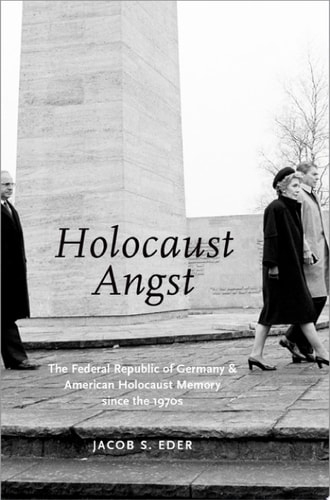
In the face of an outpouring of research on Holocaust history, Holocaust Angst takes an innovative approach. It explores how Germans perceived and reacted to how Americans publicly commemorated the Holocaust. It argues that a network of mostly conservative West German officials and their associates in private organizations and foundations, with Chancellor Kohl located at its center, perceived themselves as the "victims" of the afterlife of the Holocaust in America. They were concerned that public manifestations of Holocaust memory, such as museums, monuments, and movies, could severely damage the Federal Republic's reputation and even cause Americans to question the Federal Republic's status as an ally. From their perspective, American Holocaust memorial culture constituted a stumbling block for (West) German-American relations since the late 1970s.Providing the first comprehensive, archival study of German efforts to cope with the Nazi past vis-à-vis the United States up to the 1990s, this book uncovers the fears of German officials-some of whom were former Nazis or World War II veterans-about the impact of Holocaust memory on the reputation of the Federal Republic and reveals their at times negative perceptions of American Jews. Focusing on a variety of fields of interaction, ranging from the diplomatic to the scholarly and public spheres, the book unearths the complicated and often contradictory process of managing the legacies of genocide on an international stage. West German decision makers realized that American Holocaust memory was not an "anti-German plot" by American Jews and acknowledged that they could not significantly change American Holocaust discourse. In the end, German confrontation with American Holocaust memory contributed to a more open engagement on the part of the West German government with this memory and eventually rendered it a "positive resource" for German self-representation abroad.Holocaust Angst offers new perspectives on postwar Germ
Menrva's Summary
THE THESIS
This book investigates how West German officials perceived and responded to American Holocaust commemoration efforts during the late 20th century. Jacob S. Eder, a historian specializing in postwar German-American relations, utilizes extensive archival research to analyze the strategic anxieties of conservative West German politicians. The work argues that these officials viewed American Holocaust memory as a potential threat to the Federal Republic's international reputation and diplomatic standing, leading to a complex, defensive effort to manage the narrative of the Nazi past on the global stage.
THE SCOPE MAP
What You Will Find
- Analysis of diplomatic, scholarly, and public interactions between West Germany and the United States.
- Examination of the role of Chancellor Helmut Kohl and his associates in shaping German responses to American memorial culture.
- Documentation of the shift from viewing Holocaust memory as a diplomatic liability to a component of German self-representation.
Scope Limits
- The study focuses primarily on the period from the late 1970s through the 1990s.
- The analysis is centered on the perspectives and actions of West German officials rather than a comprehensive history of American Holocaust memory itself.
THE AUTHORITY PERSPECTIVE
Scholars recognize this work as a significant contribution to the study of memory politics and transatlantic relations. Readers frequently note the meticulous archival detail and the nuanced exploration of how political actors navigate historical legacies in the international arena.
Page Count:
528
Publication Date:
2016-01-12
Publisher:
Oxford University Press
ISBN-10:
0190237821
ISBN-13:
9780190237820
History
Ethnic relations
Antisemitism
International relations
German history
Community Tags
Similar Books