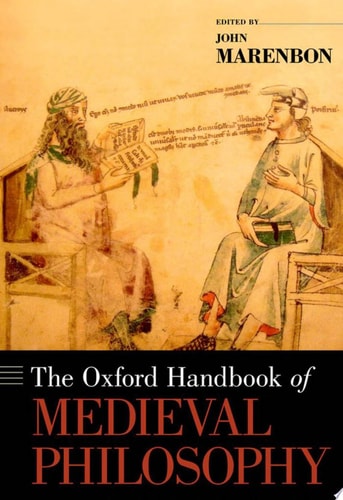
The Oxford Handbook of Medieval Philosophy
0
0
As an Amazon Associate and affiliate partner, Menrva Books earns from qualifying purchases. Learn more
Author Description
This Handbook is intended to show the links between the philosophy written in the Middle Ages and that being done today. Essays by over twenty medieval specialists, who are also familiar with contemporary discussions, explore areas in logic and philosophy of language, metaphysics, epistemology, moral psychology ethics, aesthetics, political philosophy and philosophy of religion. Each topic has been chosen because it is of present philosophical interest, but a more or less similar set of questions was also discussed in the Middle Ages. No party-line has been set about the extent of the similarity. Some writers (e.g. Panaccio on Universals; Cesalli on States of Affairs) argue that there are the closest continuities. Others (e.g. Thom on Logical Form; Pink on Freedom of the Will) stress the differences. All, however, share the aim of providing new analyses of medieval texts and of writing in a manner that is clear and comprehensible to philosophers who are not medieval specialists.The Handbook begins with eleven chapters looking at the history of medieval philosophy period by period, and region by region. They constitute the fullest, most wide-ranging and up-to-date chronological survey of medieval philosophy available. All four traditions - Greek, Latin, Islamic and Jewish (in Arabic, and in Hebrew) - are considered, and the Latin tradition is traced from late antiquity through to the seventeenth century and beyond.
Menrva's Summary
THE THESIS
This volume investigates the conceptual bridges between medieval philosophical inquiry and contemporary analytical discourse. Edited by John Marenbon, a prominent scholar in the field, the text compiles contributions from over twenty specialists to evaluate how medieval debates on logic, metaphysics, and ethics inform modern philosophical problems. The work argues that medieval texts remain relevant by presenting a comparative framework that highlights both the continuities and the distinct historical divergences in Western, Islamic, and Jewish intellectual traditions.
THE SCOPE MAP
What You Will Find
- A comprehensive chronological survey covering Greek, Latin, Islamic, and Jewish philosophical traditions.
- Analysis of specific domains including logic, philosophy of language, epistemology, and political philosophy.
- Comparative essays that contrast medieval perspectives with modern analytical approaches.
Scope Limits
- The text does not provide an exhaustive history of every minor medieval thinker.
- It focuses primarily on topics of current philosophical interest rather than a purely antiquarian historical account.
THE AUTHORITY PERSPECTIVE
Scholars and students frequently cite this handbook as a primary resource for bridging the gap between historical medieval studies and contemporary philosophy. Experts highlight the clarity of the prose and the breadth of the chronological survey as defining features of the collection.
Page Count:
770
Publication Date:
2015-05-28
Publisher:
Oxford University Press
ISBN-10:
0190246979
ISBN-13:
9780190246976
Philosophy
Logic
Ethics
Metaphysics
Philosophy history
Community Tags
Other Editions(2)

Similar Books