Simulating Organizations
0
0
As an Amazon Associate and affiliate partner, Menrva Books earns from qualifying purchases. Learn more
Author Description
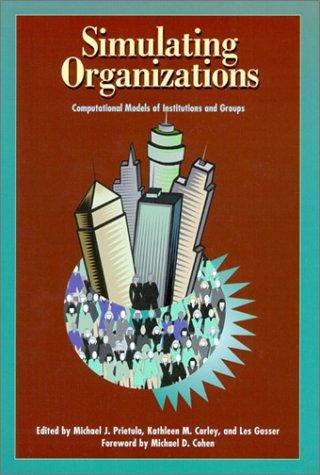
Paralleling developments in the physical sciences, computational modeling is emerging in the social and organizational sciences. Organizational researchers are using computational models to gain insights into organizational phenomena and to explore dynamic processes and configurations that are difficult or impossible to investigate with other methods. Many interesting insights have already resulted from this research, such as how group cooperation arises or dissipates in social dilemma settings, and how honesty and benevolence affect behavior in a group task. On the practical side, computational modeling is increasingly effective for organizational design, analysis, and reengineering. Although much work remains to be done, eventually both theorists and practitioners will routinely state theories, design organizations, and derive their implications using widely shared computational tools. This volume brings together work from many of the leading researchers in the field.
Menrva's Summary
THE THESIS
The computational modeling of organizational phenomena is an emerging field with the potential to revolutionize how theories are developed and organizations are designed. Organizational researchers are increasingly employing computational models to understand complex dynamics, such as the emergence of cooperation or the impact of trust on group tasks, which are challenging to study through traditional methods. This volume compiles research from leading figures in the field, highlighting its growing importance for both theoretical exploration and practical applications in organizational design and reengineering. The work suggests a future where computational tools are standard for stating theories, designing organizations, and analyzing their implications.
THE SCOPE MAP
- Exploration of computational modeling in social and organizational sciences.
- Insights into group cooperation and social dilemma settings.
- Analysis of honesty and benevolence in group tasks.
- Applications of computational modeling for organizational design.
- Use of computational modeling for organizational analysis.
- Reengineering organizational structures through computational methods.
- Contributions from leading researchers in the field.
THE AUTHORITY PERSPECTIVE
This collection brings together prominent researchers in the burgeoning field of computational modeling for organizational studies. The work presented aims to demonstrate the utility of computational approaches for gaining insights into complex organizational dynamics that are difficult to study through conventional means. It highlights the potential for these methods to inform organizational design, analysis, and reengineering, suggesting a future where such tools are routinely used by theorists and practitioners alike. The compilation serves as a snapshot of the field's advancements and its promise for future development.
Page Count:
248
Publication Date:
1998-01-01
ISBN-10:
026266108X
Non-Fiction
Science
Art
Business strategy
Community Tags
Similar Books