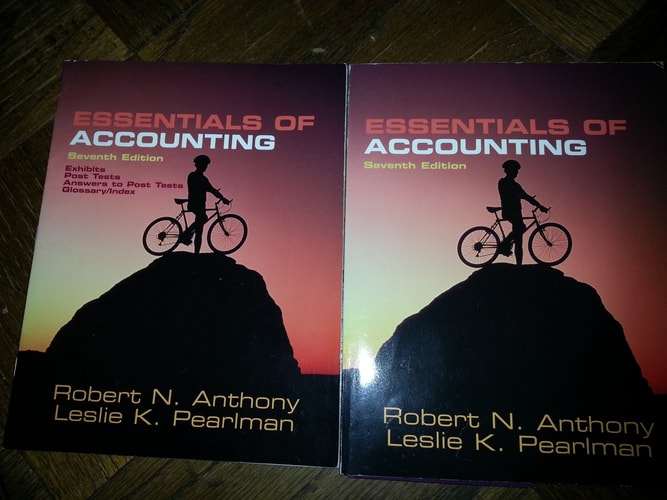
Essentials of Accounting
0
0
As an Amazon Associate and affiliate partner, Menrva Books earns from qualifying purchases. Learn more
Author Description
Designed specifically for active users of business data--rather than preparers of accounting information (bookkeepers), this self-study, self-paced introduction to financial accounting uses an interactive programmed approach to present the ideas and terminology essential to an understanding of balance sheets, income statements, and statements of cash flows. Every frame requires readers to actively solve a problem involving accounting information--e.g., selecting a correct word from two choices, providing an answer, making a journal entry, or preparing a complete balance sheet. Includes the most recent pronouncements of the Financial Accounting Standards Board. The Balance Sheet. Balance Sheet Changes; Income Measurement. Accounting Records and Systems. Revenues and Monetary Assets. Expense Measurement; The Income Statement. Inventories and Cost of Sales. Noncurrent Assets and Depreciation. Liabilities and Equity. Statement of Cash Flows. Analysis of Financial Statements. A self-study manual for those in executive, vocational, or management training programs, and for new hires who are expected to have a knowledge of accounting, especially banks, investment firms, and consulting firms.
Menrva's Summary
THE THESIS
This text investigates the core principles of financial accounting through a self-paced, interactive framework designed for business data users rather than professional bookkeepers. Authors Leslie K. Pearlman and Robert N. Anthony utilize a programmed learning methodology to ensure readers grasp the mechanics of financial statements. By requiring active participation in every frame, the book bridges the gap between theoretical accounting terminology and practical application in corporate environments. The content is aligned with the latest standards set by the Financial Accounting Standards Board to ensure technical accuracy.
THE SCOPE MAP
What You Will Find
- Comprehensive coverage of balance sheets, income statements, and cash flow analysis.
- A programmed learning methodology requiring active problem-solving for every concept.
- Practical exercises including journal entries and financial statement preparation.
- Detailed modules on inventories, cost of sales, depreciation, and equity structures.
THE AUTHORITY PERSPECTIVE
Experts and educators recognize this text as a foundational resource for professionals in management, banking, and consulting who require accounting literacy. Readers frequently note the effectiveness of the self-paced format in building technical competence without the need for traditional classroom instruction.
Page Count:
224
Publication Date:
1999-08-03
Publisher:
Prentice Hall
ISBN-10:
0201615401
ISBN-13:
9780201615401
Business
Accounting
Management
Education
Finance
Community Tags
Similar Books