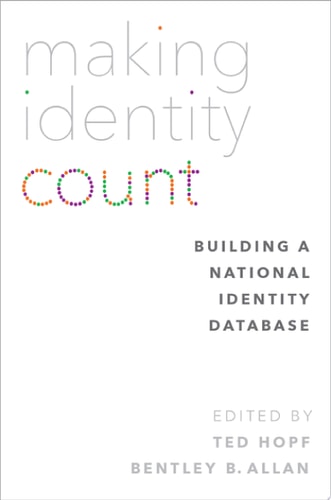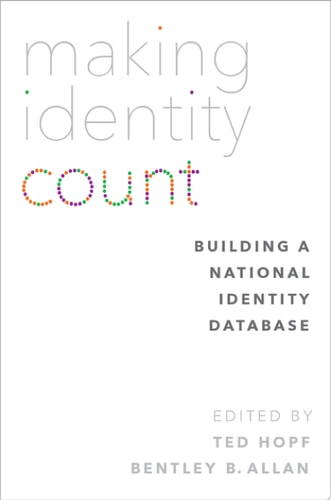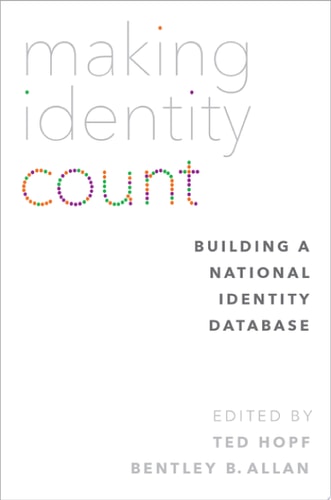
Making Identity Count
0
0
As an Amazon Associate and affiliate partner, Menrva Books earns from qualifying purchases. Learn more
Author Description
Constructivism, Despite Being One Of The Three Main Streams Of Ir Theory, Along With Realism And Liberalism, Is Rarely, If Ever, Tested In Large-n Quantitative Work. Constructivists Almost Unanimously Eschew Quantitative Approaches, Assuming That Variables Of Interest To Constructivists, Defy Quantification. Quantitative Scholars Mostly Ignore Constructivist Variables As Too Fuzzy And Vague. And The Rare Instances In Which Quantitative Scholars Have Operationalized Identity As A Variable, They Have Unfortunately Realized All The Constructivists' Worst Fears About Reducing National Identity To A Single Measure, Such As Language, Religion, Or Ethnicity, Thereby Violating One Of The Foundational Assumptions Of Constructivism: Intersubjectivity. Making Identity Count Presents A New Method For The Recovery Of National Identity, Applies The Method In 9 Country Cases, And Draws Conclusions From The Empirical Evidence For Hegemonic Transitions And A Variety Of Quantitative Theories Of Identity. Ted Hopf And Bentley B. Allan Make The Constructivist Variable Of National Identity A Valid Measure That Can Be Used By Large-n International Relations Scholars In A Variety Of Ways. They Lay Out What Is Wrong With How Identity Has Been Conceptualized, Operationalized And Measured In Quantitative Ir So Far And Specify A Methodological Approach That Allows Scholars To Recover The Predominant National Identities Of States In A More Valid And Systematic Fashion. The Book Includes National Identity Reports On China, The Us, Uk, Germany, France, Brazil, Japan, And India To Both Test The Authors' Method And Demonstrate The Promise Of The Approach. Hopf And Allan Use These Data To Test A Constructivist Hypothesis About The Future Of Western Neoliberal Democratic Hegemony. Finally, The Book Concludes With An Assessment Of The Method, Including Areas Of Possible Improvement, As Well As A Description Of What An Intersubjective National Identity Data Base Of Great Powers From 1810-2010 Could Mean.
Menrva's Summary
THE THESIS
How can the constructivist concept of national identity be rigorously operationalized and measured for use in large-n quantitative international relations research? Authors Bentley B. Allan and Ted Hopf argue that the traditional divide between constructivist theory and quantitative methodology is unnecessary. By addressing the failure of previous attempts to reduce identity to simplistic proxies like language or religion, the authors propose a systematic methodological framework that captures the intersubjective nature of national identity to facilitate empirical testing in political science.
THE SCOPE MAP
What You Will Find
- A methodological framework for recovering national identity through systematic analysis.
- Empirical case studies covering China, the US, UK, Germany, France, Brazil, Japan, and India.
- Application of the method to test hypotheses regarding hegemonic transitions and neoliberal democratic stability.
Scope Limits
- The book does not provide a complete, finalized database of all great powers from 1810-2010, but rather outlines the requirements and potential for such a project.
- It does not attempt to resolve all ontological debates within constructivist theory, focusing instead on the practical application of measurement.
THE AUTHORITY PERSPECTIVE
Scholars in the field of international relations recognize this work as a significant attempt to bridge the gap between qualitative constructivist theory and quantitative empirical analysis. Experts note that the text provides a clear, actionable methodology for researchers seeking to incorporate complex social variables into large-scale statistical models.
Page Count:
240
Publication Date:
2016-01-01
Publisher:
Oxford University Press
ISBN-10:
0190255498
ISBN-13:
9780190255497
Constructivism
International relations
Methodology
Community Tags
Similar Books