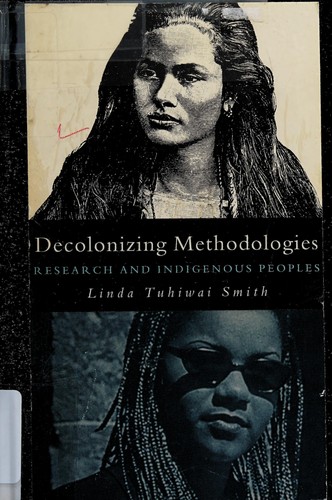
Decolonising Methodologies
0
0
As an Amazon Associate and affiliate partner, Menrva Books earns from qualifying purchases. Learn more
Author Description
From the vantage point of the colonized, the term 'research' is inextricably linked with European colonialism; the way in which scientific research has been implicated in the worst excesses of imperialism remains a powerful remembered history for many of the world's colonized peoples. Here, an indigenous researcher issues a clarion call for the decolonization of research methods. In the first part of the book, the author critically examines the historical and philosophical base of Western research. Extending the work of Foucault, she explores the intersections of imperialism, knowledge and research; en route she provides a history of knowledge from the Enlightenment to postcoloniality. The second part of the book meets an urgent demand: people who are carrying out their own research projects need literature which validates their frustrations in dealing with various Western paradigms. In setting an agenda for planning and implementing indigenous research, the author shows how such programmes are part of the wider project of reclaiming control over indigenous ways of knowing and being.
Menrva's Summary
THE THESIS
This book challenges the historical and philosophical foundations of Western research methodologies, arguing they are inextricably linked to colonialism and imperialism. The author, Linda Tuhiwai Smith, an indigenous researcher, critically examines how scientific research has been used to justify and perpetuate colonial power structures. She explores the intersections of imperialism, knowledge, and research, tracing the evolution of knowledge from the Enlightenment to postcoloniality. The book then provides a framework for indigenous peoples to reclaim control over their own ways of knowing and being by developing and implementing their own research agendas.
THE SCOPE MAP
- A critical examination of the historical and philosophical underpinnings of Western research paradigms.
- An exploration of the connections between imperialism, knowledge production, and research practices.
- A historical overview of knowledge systems from the Enlightenment to the postcolonial era.
- Validation for researchers facing frustrations with Western research frameworks.
- An agenda for planning and implementing indigenous research projects.
- Strategies for reclaiming control over indigenous ways of knowing and being.
- Analysis of how research has been implicated in colonial exploitation.
THE AUTHORITY PERSPECTIVE
Linda Tuhiwai Smith's 'Decolonising Methodologies' is a foundational text in postcolonial studies and indigenous research. It is widely recognized for its powerful critique of Western research practices and its advocacy for indigenous epistemologies. Scholars frequently cite its influence in shaping discussions around research ethics and methodologies in diverse academic fields. The book's enduring relevance lies in its call for researchers to confront the colonial legacies embedded within knowledge production and to support the self-determination of indigenous peoples in research.
Page Count:
208
Publication Date:
1999-01-01
ISBN-10:
1856496236
ISBN-13:
9781856496230
Non-Fiction
History
Philosophy
Sociology
Research Methods
Community Tags
Similar Books