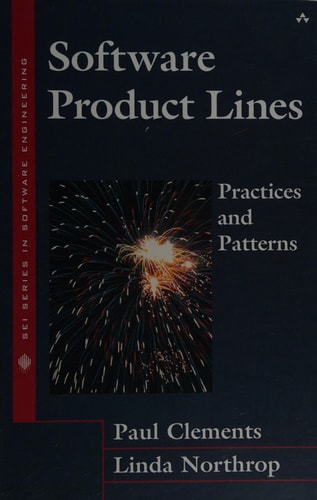
Software Product Lines: Practices and Patterns
0
0
As an Amazon Associate and affiliate partner, Menrva Books earns from qualifying purchases. Learn more
Author Description
Long a standard practice in traditional manufacturing, the concept of product lines is relatively new to the software industry. A software product line is a family of systems that share a common set of core technical assets, with preplanned extensions and variations to address the needs of specific customers or market segments. Software organizations of all types and sizes are discovering that when skillfully implemented, a product line strategy can yield enormous gains in productivity, quality, and time-to-market.Software Product Lines is the culmination of an intensive investigation, undertaken by the Software Engineering Institute (SEI) at Carnegie Mellon, into how leading-edge software development organizations have "retooled" for product lines. With explanations of fundamental concepts further illuminated by real-world experience, this book spells out the technical issues involved in adopting a product line strategy, as well as the organizational and management issues that are so critical for success. In providing a comprehensive set of practices and patterns, this book defines and explores the key activities for software product line development and explains specific practice areas in engineering, technical management, and organizational management.Highlights include: The benefits of a software product line approach, including actual improvement data from industrial success stories Methods to develop a reusable base of core assets and to develop products that utilize that core Common problems paired with concrete solutions in the form of reusable software product pine patterns Twenty-nine practice areas for successful implementation, including architecture definition,component development, configuration management, market analysis, and training The product line technical probe for identifying technical and organizational weaknesses that could impede successThree detailed case studies from the industry lead you step by step through the process of developing and
Menrva's Summary
THE THESIS
This book investigates how software organizations can transition from traditional development models to a product line strategy to achieve significant gains in productivity, quality, and time-to-market. Paul Clements and Linda M. Northrop, researchers from the Software Engineering Institute at Carnegie Mellon, synthesize years of intensive investigation into the practices of leading-edge development firms. The authors present a comprehensive framework that addresses the technical, organizational, and management challenges inherent in building families of systems that share core assets.
THE SCOPE MAP
What You Will Find
- A detailed taxonomy of twenty-nine practice areas covering engineering, technical management, and organizational management.
- A collection of reusable patterns designed to solve common problems encountered during product line implementation.
- Industrial case studies providing step-by-step analysis of real-world software product line adoption.
- The product line technical probe methodology for identifying organizational and technical weaknesses.
THE AUTHORITY PERSPECTIVE
Experts and practitioners regard this work as a foundational text for understanding the systematic reuse of software assets. Readers frequently note the academic rigor and the practical utility of the provided patterns for large-scale software development environments.
Page Count:
563
Publication Date:
2001-08-01
Publisher:
Addison-Wesley Professional
ISBN-10:
0201703327
ISBN-13:
9780201703320
Computer software
Systems Architecture
Software Engineering
Computer Science
Technology
Community Tags
Similar Books