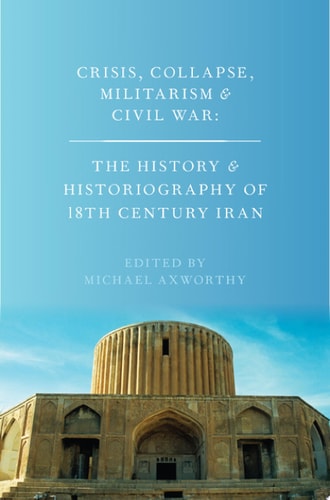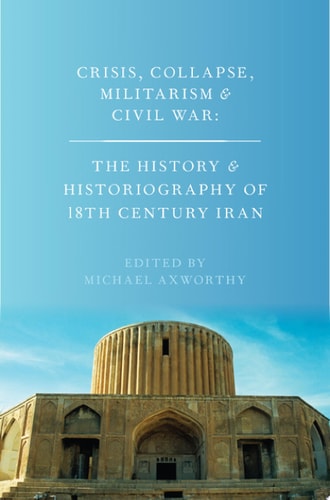
Crisis, Collapse, Militarism and Civil War: The History and Historiography of 18th Century Iran
0
0
As an Amazon Associate and affiliate partner, Menrva Books earns from qualifying purchases. Learn more
Author Description
The eighteenth century was a crucial era in modern Iranian history, but up to now it has been little studied outside Iran. In Crisis, Collapse, Militarism and Civil War, Michael Axworthy has gathered leading experts on this period from around the world to provide a multifaceted account of this fascinating, dramatic, and turbulent era. The volume covers economics, intellectual history, military developments, politics, and the visual arts.In the 1720s, after the collapse of Safavid rule in 1722, it seemed that Iran might disappear altogether, partitioned between her neighbors. Within a few years the country surged back to make a bid for regional dominance under Nader Shah, but lapsed again into civil war after his untimely death in 1747. The civil wars lasted almost until the end of the century, albeit with an interlude of relative calm and good governance under Karim Khan Zand, who ruled from the mid-1750s until his death in 1779. In 1796, after more civil wars, Agha Mohammad Shah had himself crowned as the first monarch of the Qajar dynasty, which lasted until 1925. This formative period is vital for understanding modern and contemporary Iran, and it is a fascinating drama of events and personalities in its own right. It was a period of crisis and turmoil, but also a period of possibility and creativity in ways that have for the most part been forgotten.Until now, scholarship on the significance of the eighteenth century in Iran has been scant and often obscure. This volume will not only change that, but it will also reshape our understanding of the history of one of the most important and influential states in the Middle East.
Menrva's Summary
THE THESIS
This volume investigates the political, social, and military instability of 18th-century Iran to determine its role as a formative period for the modern state. Michael Axworthy, a recognized scholar of Iranian history, compiles research from international experts to analyze the collapse of the Safavid dynasty and the subsequent rise of the Qajar monarchy. The text argues that this era, often overlooked in Western scholarship, was a period of significant transformation that defined the trajectory of the region.
THE SCOPE MAP
What You Will Find
- Analysis of the Safavid collapse in 1722 and the rise of Nader Shah
- Examination of the governance of Karim Khan Zand
- Overview of economic, intellectual, and artistic developments during the 1700s
- Historiographical review of existing scholarship on the period
Scope Limits
- Does not provide a comprehensive biography of every individual ruler
- Does not focus on contemporary 21st-century geopolitical relations
THE AUTHORITY PERSPECTIVE
Experts identify this collection as a significant contribution to filling a major gap in the study of Iranian history. Readers frequently note the academic density of the prose, which serves as a specialized resource for historians and students of Middle Eastern studies.
Page Count:
264
Publication Date:
2018-07-12
Publisher:
Oxford University Press
ISBN-10:
0190250321
ISBN-13:
9780190250324
History
Political History
Civil War
Military History
Iran
Middle Eastern
Historiography
Community Tags
Similar Books