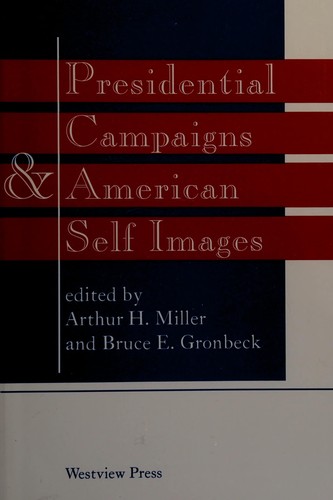
Presidential Campaigns and American Self Images
0
0
As an Amazon Associate and affiliate partner, Menrva Books earns from qualifying purchases. Learn more
Author Description
This volume explores a central political paradox: why American scholars, journalists, and citizens periodically question the viability of their presidential electoral system and yet believe that presidential elections are our best hope for a better tomorrow. The book argues that the key to understanding this paradox lies in the concept of "self image," exploring relationships between campaign activities and political culture. After presenting an introduction to the history of presidential campaigning and a theory of political image, the book arranges chapters in three parts: images centered on candidates, mass media, and the public. A final chapter assesses explanations of the contrasts between the 1988 and 1992 elections and suggests tomorrow's research agenda. Students and teachers alike will find this book ideal for college courses in campaigns and elections, political behavior, and a variety of specialty courses.
Menrva's Summary
THE THESIS
This book investigates the paradoxical nature of American presidential elections, exploring why citizens and scholars alike question their efficacy while simultaneously viewing them as essential for societal progress. It posits that the concept of "self image" is central to understanding this paradox, examining the intricate connections between campaign activities and the broader political culture. The work is structured into three parts, focusing on candidate-centered images, the role of mass media, and public perception, before concluding with an analysis of electoral contrasts and future research directions.
THE SCOPE MAP
- Introduction to the history of presidential campaigning.
- A theory of political image construction.
- Analysis of images centered on candidates.
- Examination of the role of mass media in shaping perceptions.
- Exploration of public images and voter perceptions.
- Comparative analysis of the 1988 and 1992 elections.
- Suggestions for future research agendas in campaign studies.
THE AUTHORITY PERSPECTIVE
This volume is designed as an academic text, likely appealing to students and instructors of political science, particularly those focusing on campaigns, elections, and political behavior. The book's analytical approach, grounded in the concept of "self image," suggests a focus on the psychological and cultural underpinnings of electoral processes. Its comparative analysis of specific election cycles indicates a commitment to empirical examination within a theoretical framework. The concluding chapter's focus on a research agenda points to its contribution to ongoing scholarly discourse.
Page Count:
306
Publication Date:
1994-01-01
ISBN-10:
0813318858
ISBN-13:
9780813318851
History
Non-Fiction
Politics
Science
Political Behavior
American Politics
Media Studies
Elections
Community Tags
Similar Books