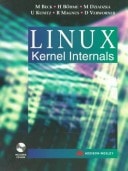
Linux Kernel Internals
0
0
As an Amazon Associate and affiliate partner, Menrva Books earns from qualifying purchases. Learn more
Author Description
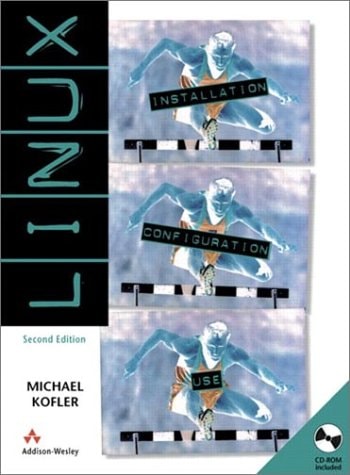
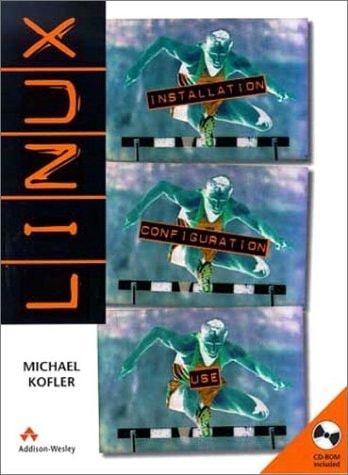
Since the introduction of Linux version 1.2 in March 1995, a whole community has evolved of programmers from all over the world who were attracted by the reliability and flexibility of this completely free operating system. Now at version 2.0, Linux is no longer only the operating system of choice for hackers, but is being successfully employed in commercial software development, by Internet providers and in research and teaching. This book is written for anybody who wants to learn more about Linux. It explains the inner mechanisms of Linux from process scheduling to memory management and file systems, and will tell you all you need to know about the structure of the kernel, the heart of the Linux operating system. The accompanying CD-ROM contains the Slackware distribution 3.1 together with its complete source code, the Linux kernel sources up to version 2.1.21, the PC speaker driver, and a wealth of documentation, as well as the program for generating the source-oriented index. This second edition of Linux Kernel Internals: * has been thoroughly updated throughout to cover Linux 2. * shows you how the Linux operating system actually works so that you can start to program the Linux kernel for yoursel * introduces the kernel sources and describes basic algorithms and data structures, such as scheduling and task structur * helps you to understand file systems, networking and how systems boot
Menrva's Summary
THE THESIS
This text investigates the internal architecture and operational mechanisms of the Linux kernel to provide developers with a comprehensive understanding of how the operating system functions at its core. Michael Beck and his co-authors leverage their technical expertise to demystify the kernel's structure, offering a detailed examination of the source code and the fundamental algorithms that govern system performance. By focusing on the transition from version 1.2 to 2.0, the book establishes a framework for understanding how Linux manages resources, processes, and data in both research and commercial environments.
THE SCOPE MAP
What You Will Find
- Detailed analysis of process scheduling and task structures within the kernel.
- Technical explanations of memory management and file system implementation.
- Examination of networking protocols and system boot sequences.
- Practical guidance on navigating and modifying kernel source code.
THE AUTHORITY PERSPECTIVE
Experts and systems programmers frequently cite this work as a foundational resource for understanding the early evolution of the Linux kernel. Readers often note the technical density of the prose, which serves as a bridge for those moving from basic usage to low-level kernel development.
Page Count:
438
Publication Date:
1996-01-01
Publisher:
Addison-Wesley
ISBN-10:
0201877422
ISBN-13:
9780201877427
Operating systems Computers
Software Engineering
Computers
Application software
Linux
Programming
Community Tags
Similar Books