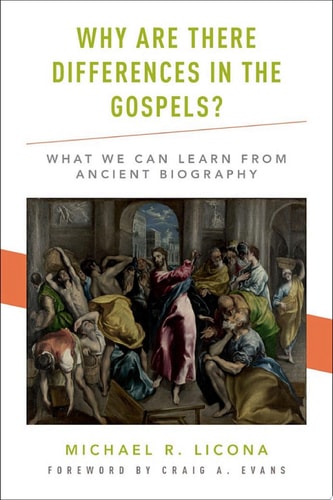
Why Are There Differences in the Gospels?: What We Can Learn from Ancient Biography
0
0
As an Amazon Associate and affiliate partner, Menrva Books earns from qualifying purchases. Learn more
Author Description
Anyone who reads the Gospels carefully will notice that there are differences in the manner in which they report the same events. These differences have led many conservative Christians to resort to harmonization efforts that are often quite strained, sometimes to the point of absurdity. Many people have concluded the Gospels are hopelessly contradictory and therefore historically unreliable as accounts of Jesus. The majority of New Testament scholars now hold that most if not all of the Gospels belong to the genre of Greco-Roman biography and that this genre permitted some flexibility in the way in which historical events were narrated. However, few scholars have undertaken a robust discussion of how this plays out in Gospel pericopes (self-contained passages). Why Are There Differences in the Gospels? provides a fresh approach to the question by examining the works of Plutarch, a Greek essayist who lived in the first and second centuries CE. Michael R. Licona discovers three-dozen pericopes narrated two or more times in Plutarch's Lives, identifies differences between the accounts, and analyzes these differences in light of compositional devices identified by classical scholars as commonly employed by ancient authors. The book then applies the same approach to nineteen pericopes that are narrated in two or more Gospels, demonstrating that the major differences found there likely result from the same compositional devices employed by Plutarch.Showing both the strained harmonizations and the hasty dismissals of the Gospels as reliable accounts to be misguided, Licona invites readers to approach them in light of their biographical genre and in that way to gain a clearer understanding of why they differ.
Menrva's Summary
THE THESIS
This book investigates why the Gospels contain variations in their accounts of the same events and whether these differences undermine their historical reliability. Michael R. Licona, a scholar of New Testament studies, utilizes the framework of Greco-Roman biography to analyze these discrepancies. By comparing the narrative techniques found in the Gospels with those used by the ancient biographer Plutarch, Licona argues that these differences are consistent with the compositional standards of the era rather than evidence of contradiction.
THE SCOPE MAP
What You Will Find
- A comparative analysis of three-dozen pericopes from Plutarch's Lives.
- An examination of nineteen pericopes found in the Gospels.
- A detailed taxonomy of compositional devices used by ancient biographers.
Scope Limits
- The analysis does not address theological or doctrinal implications beyond the historical reliability of the texts.
- The study focuses specifically on Greco-Roman biographical conventions and does not cover other literary genres present in the New Testament.
THE AUTHORITY PERSPECTIVE
Scholars and students of biblical studies frequently cite this work for its methodological rigor in applying classical literary analysis to New Testament texts. Readers often note that the prose is academically dense but provides a clear, systematic framework for understanding historical narrative variations.
Page Count:
332
Publication Date:
2016-01-01
Publisher:
Oxford University Press
ISBN-10:
0190264284
ISBN-13:
9780190264284
History
Religion
English & College Success
English
Bibles
Ancient History
Theology
Christianity
Community Tags
Similar Books