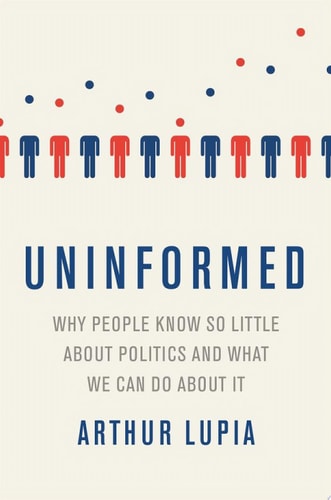
Uninformed
0
0
As an Amazon Associate and affiliate partner, Menrva Books earns from qualifying purchases. Learn more
Author Description
Research Polls, Media Interviews, And Everyday Conversations Reveal An Unsettling Truth: Citizens, While Well-meaning And Even Passionate About Current Affairs, Appear To Know Very Little About Politics. Hundreds Of Surveys Document Vast Numbers Of Citizens Answering Even Basic Questions About Government Incorrectly. Given This Unfortunate State Of Affairs, It Is Not Surprising That More Knowledgeable People Often Deride The Public For Its Ignorance. Some Experts Even Think That Less Informed Citizens Should Stay Out Of Politics Altogether. As Arthur Lupia Shows In Uninformed, This Is Not Constructive. At Root, Critics Of Public Ignorance Fundamentally Misunderstand The Problem. Many Experts Believe That Simply Providing People With More Facts Will Make Them More Competent Voters. However, These Experts Fail To Understand How Most People Learn, And Hence Don't Really Know What Types Of Information Are Even Relevant To Voters. Feeding Them Information They Don't Find Relevant Does Not Address The Problem. In Other Words, Before Educating The Public, We Need To Educate The Educators. Lupia Offers Not Just A Critique, Though; He Also Has Solutions. Drawing From A Variety Of Areas Of Research On Topics Like Attention Span And Political Psychology, He Shows How We Can Actually Increase Issue Competence Among Voters In Areas Ranging From Gun Regulation To Climate Change. To Attack The Problem, He Develops An Arsenal Of Techniques To Effectively Convey To People Information They Actually Care About. Citizens Sometimes Lack The Knowledge That They Need To Make Competent Political Choices, And It Is Undeniable That Greater Knowledge Can Improve Decision Making. But We Need To Understand That Voters Either Don't Care About Or Pay Attention To Much Of The Information That Experts Think Is Important. Uninformed Provides The Keys To Improving Political Knowledge And Civic Competence: Understanding What Information Is Important To And Knowing How To Best Convey It To Them.
Menrva's Summary
THE THESIS
The book investigates why traditional methods of political education fail to improve voter competence and proposes a new framework for effectively communicating relevant information to the public. Arthur Lupia, a professor of political science, utilizes research from cognitive psychology, communication theory, and political science to challenge the assumption that simply providing more facts to citizens increases their political efficacy. He argues that the disconnect between experts and the public stems from a fundamental misunderstanding of how individuals process information and what they prioritize in their decision-making processes.
THE SCOPE MAP
What You Will Find
- Analysis of cognitive barriers to political learning
- Strategies for effective information dissemination in public discourse
- Research on voter attention spans and psychological triggers
- Case studies on controversial topics like gun regulation and climate change
Scope Limits
- Does not provide a comprehensive history of political education systems
- Does not offer a partisan political agenda or specific policy recommendations
THE AUTHORITY PERSPECTIVE
Experts in political communication frequently cite this work as a necessary shift in how academics approach public engagement. Readers often note the accessible yet rigorous nature of the prose, which bridges the gap between complex psychological research and practical civic application.
Page Count:
336
Publication Date:
2015-01-01
Publisher:
Oxford University Press
ISBN-10:
0190263733
ISBN-13:
9780190263737
Public Policy
Civics
Communication Studies
Political Psychology
Sociology
Community Tags
Other Editions(2)
Similar Books



Reader Comments
Share Your Thoughts
No comments yet. Be the first to share your thoughts!