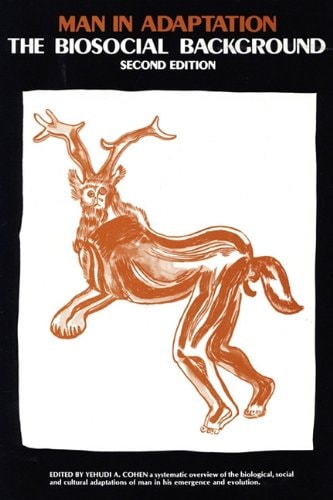
Man in Adaptation: The Biosocial Background
0
0
As an Amazon Associate and affiliate partner, Menrva Books earns from qualifying purchases. Learn more
Author Description
Underlying the anthropological study of man is the principle that there is a reality to which man must adapt if he is to survive, reproduce, and to perpetuate himself. Populations must adapt to the realities of the physical world and maintain a proper "fit" between their biological makeup and the pressures of the various niches of the world in which they seek to live. Social groups - where culture is found - must develop adaptative mechanisms in the organization of their social relations if there is to be order, regularity, and predictability in patterns of cooperation and competition and if they are to survive as viable units. This three-volume set of readings presents an introduction to anthropology that is unified and made systematic by focus on adaptations that have accompanied the evolution of man, from non-human primate to inhabitant of vast urban areas in modern industrial societies. Man in Adaptation: The Biosocial Background serves as an introduction to Physical Anthropology, Linguistics, and Archeology from the point of view of processes of adaptation. It focuses on the role of biological adaptation in man's attempts to transcend the restrictions of his natural habitats and deals with the principle issues and concepts in the study of human evolution. These volumes are the first attempt to unify the disparate subject matter of anthropology within a single and powerful explanatory framework. They incorporate the work of the most renowned anthropological experts on man, and they illuminate clearly one of the most important concepts around which one can build an investigation of the nature and scope of anthropology itself. For these reasons, they are recognized as indispensable reading for every professional anthropologist and as perhaps the best available means of introducing new students to the field.
Menrva's Summary
THE THESIS
This work investigates the fundamental principle that human survival and societal development are dictated by the necessity of adapting to both physical and social environmental pressures. Yehudi A. Cohen, a prominent anthropologist, synthesizes a vast array of scholarly research to argue that human evolution—from primate origins to modern industrial urbanism—is best understood through the lens of adaptive mechanisms. By organizing diverse anthropological data into a unified framework, the text provides a systematic approach to understanding how biological and social structures function to ensure the continuity of human populations.
THE SCOPE MAP
What You Will Find
- A comprehensive examination of human evolution from non-human primates to modern industrial societies.
- An integrated framework covering Physical Anthropology, Linguistics, and Archaeology.
- Analysis of biological adaptation as a method for transcending natural habitat restrictions.
- Case studies and expert contributions detailing the mechanisms of social cooperation and competition.
THE AUTHORITY PERSPECTIVE
Experts recognize this collection as a foundational text that successfully organizes the disparate subfields of anthropology into a coherent, process-oriented discipline. Students and professionals frequently cite the work for its clarity in defining the core concepts of human adaptation and its utility as a primary introductory resource.
Page Count:
522
Publication Date:
1974-12-31
Publisher:
Aldine Transaction
ISBN-10:
0202011127
ISBN-13:
9780202011127
Physical Anthropology
Archaeology
Anthropology
Linguistics
Adaptation Biology
Social Science
Community Tags
Similar Books