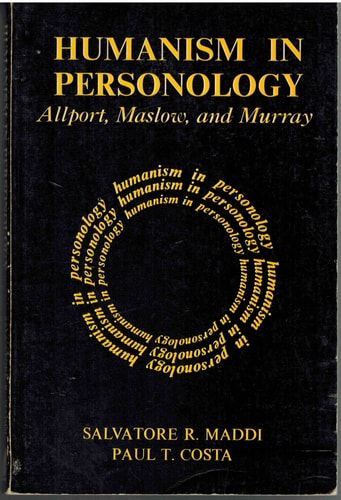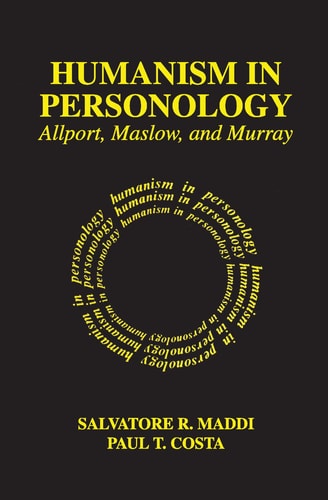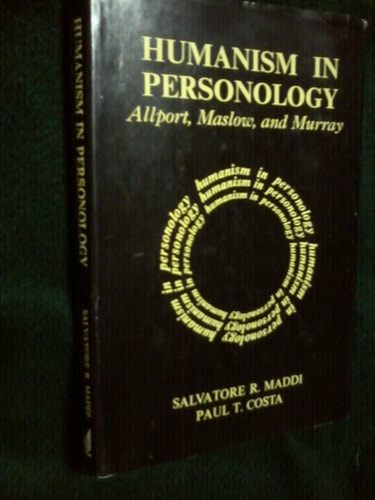
Humanism in Personology: Allport, Maslow, and Murray
0
0
As an Amazon Associate and affiliate partner, Menrva Books earns from qualifying purchases. Learn more
Author Description
Through analysis of the lives and theories of the three major exponents of humanism, Allport, Maslow, and Murray, the authors have marshaled some compelling arguments for an alternative to the extreme behaviorism of Skinner and the logical positivism of Freud. This work is a concise, clear synthesis of both broad theoretical positions and specific concepts that underlie humanistic psychology. The "Third Force" (humanism) suggests that man possesses both freedom and dignity and that he possesses them in the face of an often hostile and coercive society. Thus, exponents of humanism conducted their personality experiments in a natural environment, imposing few, if any, external controls. A compact example of critical evaluation at its best, "Humanism in Personology" stands alone in its successful attempt to correlate the theory of humanism as it exists today with an incisive study of the men who shaped its course. Maddi and Costa proceed from the level of metatheory to a lucid presentation of the specific constructs of three personality psychologists. The book contains an extensive theoretical summary table explaining the theoretical differences between Allport, Maslow, and Murray. Also featured is a comprehensive glossary of personality terms which is exceedingly valuable for new students in the field. Intended as a supplementary text for undergraduate courses in personality, social psychology, human development, human socialization, or philosophy, this work is also a valuable resource for clinicians, teachers, guidance counselors, graduates, and undergraduates in psychology.
Menrva's Summary
THE THESIS
This work investigates the core tenets of humanistic psychology by examining the theoretical contributions and personal philosophies of Gordon Allport, Abraham Maslow, and Henry Murray. Paul T. Costa Jr. and Salvatore R. Maddi utilize these three figures to construct a counter-argument against the prevailing influence of Freudian logical positivism and Skinnerian behaviorism. By analyzing the metatheoretical foundations of the "Third Force," the authors provide a structured framework for understanding human freedom and dignity within the context of societal constraints.
THE SCOPE MAP
What You Will Find
- Comparative analysis of the personality theories of Allport, Maslow, and Murray
- Theoretical summary table contrasting the specific constructs of each psychologist
- Comprehensive glossary of foundational personality terminology
- Examination of naturalistic experimental methods versus controlled laboratory environments
THE AUTHORITY PERSPECTIVE
Experts and educators frequently identify this text as a highly accessible supplementary resource for undergraduate psychology curricula. Readers often note that the authors successfully bridge the gap between abstract metatheory and practical application for students and clinicians alike.
Page Count:
200
Publication Date:
1972-01-01
Publisher:
Aldine·Atherton
ISBN-10:
020225089X
ISBN-13:
9780202250892
Philosophy
Psychology
Humanistic psychology
Personality Theory
Community Tags
Similar Books