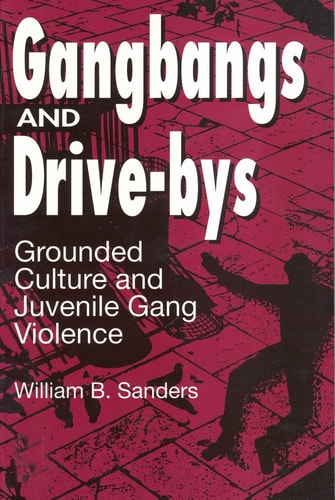
Gangbangs and Drive-bys: Grounded Culture and Juvenile Gang Violence
0
0
As an Amazon Associate and affiliate partner, Menrva Books earns from qualifying purchases. Learn more
Author Description
This study, based on quantitative and qualitative data gathered over a twelve-year period, takes its title from the two predominant styles of gang violence: 'drive-bys,' which have replaced 'rumbles' as the primary form of gang violence; and 'gang-bangs' - a generic term for other gang violence that includes assaults, knifings, and beatings.The author attempts to understand the situations in which a young man would drive up to another human being and, without further ado, blow his head off. By examining hundreds of such situations, and employing both structural and phenomenological analysis, Sanders explores the various configurations of gang violence.Gangbangs and Drive-bys also examines the routines of gang members and their view of life, the different styles of gangs, and changes undergone by gangs from the early 1980s to the end of the same decade. Over that period, the emphasis shifted from parties and paybacks to big money from the sale of rock cocaine, and from unstructured to organized crime. Along with that shift came an increase in the violence.Finally, Sanders traces the beginning and evolution of a metropolitan police gang unit over the same decade in order to present an inside view of how the police attempt to deal with and understand gangs.
Menrva's Summary
THE THESIS
This study investigates the structural and phenomenological drivers of juvenile gang violence to explain the escalation of lethal encounters in urban environments. William B. Sanders utilizes twelve years of qualitative and quantitative data to analyze the shift from traditional gang rumbles to the prevalence of drive-by shootings and organized criminal activity. By examining the routines and worldviews of gang members, the author constructs a framework that links the transition toward rock cocaine distribution with increased levels of violence. The work also incorporates an analysis of police responses to these shifts, providing a dual perspective on the mechanics of gang-related crime.
THE SCOPE MAP
What You Will Find
- Longitudinal data covering gang evolution from the early 1980s to the end of the decade.
- Comparative analysis of gang structures, ranging from unstructured social groups to organized criminal enterprises.
- Qualitative insights derived from the observation of gang member routines and belief systems.
- An examination of the development and operational strategies of metropolitan police gang units.
THE AUTHORITY PERSPECTIVE
Experts recognize this work as a significant sociological contribution to the study of urban violence during the late twentieth century. Readers frequently note the clinical approach Sanders takes in documenting the transition from localized conflict to organized drug-related crime.
Page Count:
198
Publication Date:
1994-12-31
Publisher:
Aldine Transaction
ISBN-10:
0202305368
ISBN-13:
9780202305363
Social Issues
Sociology
Law Enforcement
Rape
Criminology
Violence
Urban Studies
Community Tags
Similar Books