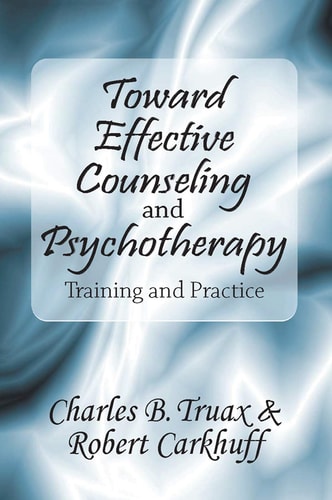
Toward Effective Counseling and Psychotherapy
0
0
As an Amazon Associate and affiliate partner, Menrva Books earns from qualifying purchases. Learn more
Author Description
The field of counseling and psychotherapy has for years presented the puzzling spectacle of unabating enthusiasm for forms of treatment whose effectiveness cannot be objectively demonstrated. With few exceptions, statistical studies have consistently failed to show that any form of psychotherapy is followed by significantly more improvement than would be caused by the mere passage of an equivalent period of time. Despite this, practitioners of various psychotherapeutic schools have remained firmly convinced that their methods are effective. Many recipients of these forms of treatment also believe that they are being helped.The series of investigations reported in this impressive book resolve this paradoxical state of affairs. The investigators have overcome two major obstacles to progress in the past--lack of agreement on measures of improvement and difficulty of measuring active ingredients of the psychotherapy relationship. The inability of therapists of different theoretical persuasions to agree on criteria of improvement has made comparison of the results of different forms of treatment nearly impossible. The authors have solved this intractable problem by using a wide range of improvement measures and showing that, regardless of measures used in different studies, a significantly higher proportion of results favor their hypothesis than disregard it.Overall, this book represented a major advance at the time of its original publication and is of continuing importance. The research findings resolve some of the most stubborn research problems in psychotherapy, and the training program based on them points the way toward overcoming the shortage of psychotherapists.
Menrva's Summary
THE THESIS
This work investigates the fundamental question of whether psychotherapeutic interventions produce measurable improvements in patient outcomes compared to the passage of time alone. The authors, Charles B. Truax and Robert R. Carkhuff, utilize extensive empirical research to challenge the lack of objective evidence in traditional therapeutic practices. By establishing standardized criteria for measuring patient progress and identifying the active ingredients within the therapist-patient relationship, they provide a framework for evaluating therapeutic efficacy across diverse schools of thought.
THE SCOPE MAP
What You Will Find
- Quantitative analysis of patient improvement metrics across various therapeutic modalities.
- A methodology for measuring the active ingredients of the therapeutic relationship.
- Empirical evidence addressing the long-standing debate regarding the effectiveness of psychotherapy.
- A proposed training program designed to address the professional shortage of qualified psychotherapists.
THE AUTHORITY PERSPECTIVE
Experts recognize this text as a foundational contribution to the empirical study of psychotherapy outcomes. Readers frequently note the academic density of the prose, which serves as a rigorous examination of clinical effectiveness for practitioners and researchers alike.
Page Count:
432
Publication Date:
2007-12-15
Publisher:
Routledge
ISBN-10:
0202309886
ISBN-13:
9780202309880
Psychology
Counseling
Research Methods
Mental Health
Psychotherapy
Community Tags
Similar Books