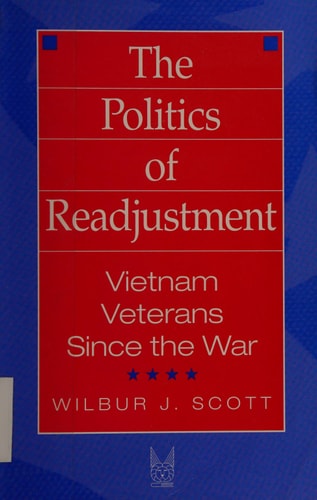
The Politics of Readjustment: Vietnam Veterans since the War
0
0
As an Amazon Associate and affiliate partner, Menrva Books earns from qualifying purchases. Learn more
Author Description
Veterans of all wars face a demanding task in readjusting to civilian life. Vietnam veterans have borne an additional burden, having returned from a controversial war that ended in defeat for the United States and South Vietnam. To address this situation, leaders among the Vietnam veterans and their allies formed organizations of their own to articulate their problems and extract concessions from a reluctant Congress, Federal agencies, and courts.Scott, a former infantry platoon leader in Vietnam, describes the major social movements among his fellow veterans during the period of 1967 to 1990 in a lively narrative, combining personal interviews with documentary and press records. Included in the book are the 'sociological stories' of protests against the war in Operations RAW and Dewey Canyon III: the successful effort to place post-traumatic stress disorder (PTSD) in the Diagnostic and Statistical Manual, Third Edition (DSM-III), of the American Psychiatric Association; the building of the National Vietnam Veterans Memorial in Washington, D.C., despite fierce opposition; and the long-running controversy over the herbicide Agent Orange. In the last chapter the author details the sociological thinking that informs his stories, and develops the implications for understanding social movements in general and veterans' issues in particular.
Menrva's Summary
THE THESIS
This book investigates the complex social and political processes through which Vietnam veterans organized to secure recognition, medical support, and public acknowledgment following their return from an unpopular war. Wilbur S. Scott, a former infantry platoon leader, utilizes a sociological framework to analyze the period between 1967 and 1990. By synthesizing personal interviews with primary documentary evidence and press records, the author constructs a detailed account of how veteran-led movements successfully challenged federal institutions and medical establishments to address the unique needs of those who served in Vietnam.
THE SCOPE MAP
What You Will Find
- Analysis of organized veteran protests including Operations RAW and Dewey Canyon III.
- Documentation of the campaign to recognize post-traumatic stress disorder (PTSD) within the DSM-III.
- Historical account of the political and social obstacles faced during the construction of the National Vietnam Veterans Memorial.
- Examination of the long-term legal and medical controversies surrounding Agent Orange exposure.
- A theoretical framework for understanding the mechanics of social movements and veteran advocacy.
THE AUTHORITY PERSPECTIVE
Experts and scholars in the field of sociology and military history recognize this work as a significant contribution to the study of post-war readjustment and social activism. Readers frequently note the balance between the author's personal experience as a veteran and his rigorous application of sociological theory to the political landscape of the late twentieth century.
Page Count:
285
Publication Date:
1993-12-31
Publisher:
Routledge
ISBN-10:
0202304051
ISBN-13:
9780202304052
History
Sociology
Vietnam War
Military
Community Tags
Similar Books