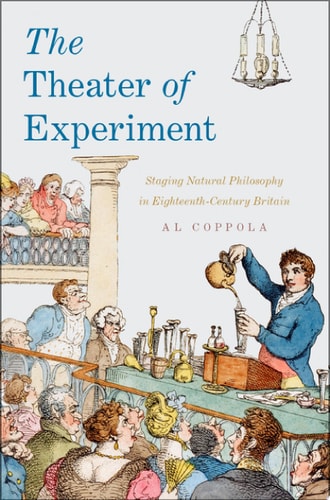
The Theater of Experiment
0
0
As an Amazon Associate and affiliate partner, Menrva Books earns from qualifying purchases. Learn more
Author Description
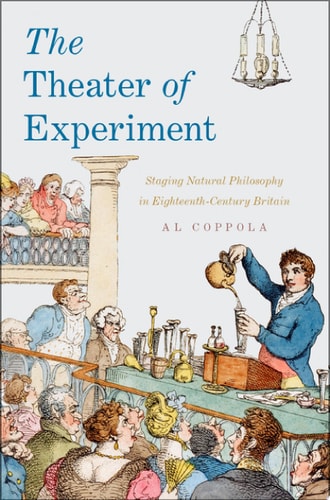
The first book-length study of the relationship between science and theater during the long eighteenth century in Britain, The Theater of Experiment explores the crucial role of spectacle in the establishment of modern science by analyzing how eighteenth-century science was staged in a double sense. On the one hand, this study analyzes science in performance: the way that science and scientists were made a public spectacle in comedies, farces, and pantomimes for purposes that could range from the satiric to the pedagogic to the hagiographic. But this book also considers the way in which these plays laid bare science as performance: that is, the way that eighteenth-century science was itself a kind of performing art, subject to regimes of stagecraft that traversed the laboratory, the lecture hall, the anatomy theater, and the public stage. Not only did the representation of natural philosophy in eighteenth-century plays like Thomas Shadwell's Virtuoso, Aphra Behn's The Emperor of the Moon, Susanna Centlivre's The Basset Table, and John Rich's Necromancer, or Harelequin Doctor Faustus, influence contemporary debates over the role that experimental science was to play public life, the theater shaped the very form that science itself was to take. By disciplining, and ultimately helping to legitimate, experimental philosophy, the eighteenth-century stage helped to naturalize an epistemology based on self-evident, decontextualized facts that might speak for themselves. In this, the stage and the lab jointly fostered an Enlightenment culture of spectacle that transformed the conditions necessary for the production and dissemination of scientific knowledge.
Menrva's Summary
THE THESIS
This study investigates the symbiotic relationship between scientific practice and theatrical performance in eighteenth-century Britain, arguing that the stage was instrumental in shaping the public identity of modern science. Al Coppola, an associate professor of English, utilizes a wide range of primary texts including comedies, pantomimes, and scientific treatises to demonstrate how experimental philosophy adopted the techniques of stagecraft. The work posits that the laboratory and the theater functioned as interconnected spaces where the production of scientific knowledge was inherently performative.
THE SCOPE MAP
What You Will Find
- Analysis of eighteenth-century dramatic works by authors such as Thomas Shadwell, Aphra Behn, and Susanna Centlivre.
- Examination of the intersection between laboratory protocols and theatrical stagecraft.
- Historical context regarding the public reception of natural philosophy in Britain.
Scope Limits
- The study focuses primarily on the British context and does not provide a comprehensive global history of science.
- It does not cover the technical scientific advancements of the period in isolation from their cultural and theatrical representations.
THE AUTHORITY PERSPECTIVE
Scholars in the fields of history of science and literature recognize this work as a significant contribution to understanding the performative nature of Enlightenment knowledge production. Readers frequently note the academic density of the prose, which provides a rigorous framework for analyzing the cultural legitimacy of experimental philosophy.
Page Count:
288
Publication Date:
2016-01-01
Publisher:
Oxford University Press
ISBN-10:
0190269723
ISBN-13:
9780190269722
Philosophy of
Eighteenth Century
Science History
British literature
Theater History
Community Tags
Similar Books