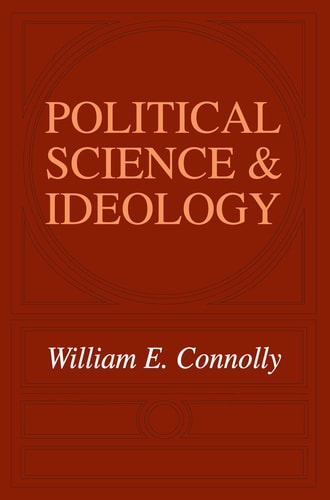
Political Science and Ideology
0
0
As an Amazon Associate and affiliate partner, Menrva Books earns from qualifying purchases. Learn more
Author Description
Professor David Kettler commented at the time of initial release, that this book is "writing with great poise and clarity, the author says important things in a deceptively simple way about a problem of paramount significance. A fine piece of clarification, blending just the right mixture of respect and impiety toward the important heroes of contemporary political science, this is the kind of book I look forward to having available for our courses in political theory."Ideology, though long pronounced moribund, continues to play a central role in contemporary political inquiry. In this reevaluation of the true function of political science, the author lays down guidelines for the construction of fruitful political interpretations in the large areas where ideological assumptions and claims cannot be adequately tested. He analyzes two representative theories of power in American society-those of the "pluralists" who affirm and the "elitists" who dispute the case for democracy-and demonstrates how personal preferences and group-oriented interests enter into the development of these concepts. Speaking to all social scientists and students engaged in the study of political processes, Connolly details the methods by which the investigator-who inevitably brings his own beliefs and values to the task-can lay bare and control the ideological aspects of his own work and that of others.A critical examination of the writings of some of the leading figures in recent and contemporary political inquiry, such as Karl Mannheim, C. Wright Mills, Robert Dahl, Daniel Bell, and Seymour Martin Lipset leads him to assign a decisive role for the political scientist in the creation of carefully formulated ideologies. An original mind, drawing upon an exceptionally rich store of knowledge, has here produced an important book which will be of immediate-and challenging-relevance to the work and studies of all scholars, graduate students, and majors in the field of government and to all concerne
Menrva's Summary
THE THESIS
This work investigates the persistent role of ideology in political inquiry and the methodological challenges inherent in maintaining objectivity within the social sciences. William E. Connolly, a prominent political theorist, examines how personal values and group-oriented interests inevitably influence the construction of political theories. He argues that rather than attempting to eliminate ideological influence, scholars should focus on identifying and controlling these biases to produce more rigorous and transparent political interpretations.
THE SCOPE MAP
What You Will Find
- A critical analysis of pluralist and elitist theories of power in American society.
- Methodological guidelines for identifying and managing ideological assumptions in research.
- Evaluations of the works of influential political thinkers including Karl Mannheim, C. Wright Mills, and Robert Dahl.
- A framework for the role of the political scientist in the deliberate creation of formulated ideologies.
THE AUTHORITY PERSPECTIVE
Scholars and students of political theory frequently cite this text as a foundational examination of the intersection between subjective belief and objective inquiry. Experts highlight the clarity of Connolly's prose and the enduring relevance of his critique for contemporary social science methodology.
Page Count:
190
Publication Date:
2006-08-15
Publisher:
Routledge
ISBN-10:
0202308510
ISBN-13:
9780202308517
Philosophy
Political Theory
Social Science
Ideology
Community Tags
Similar Books