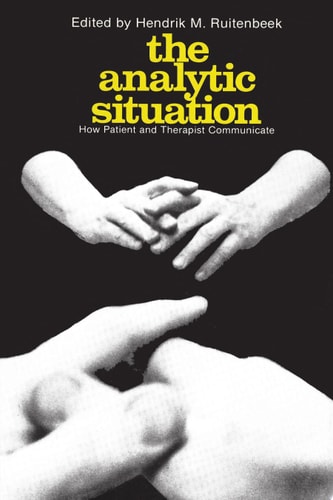
The Analytic Situation
0
0
As an Amazon Associate and affiliate partner, Menrva Books earns from qualifying purchases. Learn more
Author Description
Significant As Has Been The Role Of Psychoanalysis And Psychotherapy In Contemporary Culture And Society, Its Importance Continues To Grow At An Accelerating Rate As More Specific, Focused, And Involving Forms Of Therapy Are Devised. The Contributions Of Eminent Practitioners That Make Up This Volume Deal With Specific Types Of Occurrences In The Confrontation Between Patient And Therapist, Such As Silence, Crying, Sleeping, Touching, Use Of First Names, Gifts, Note Taking, Termination, Etc. The Views Expressed Here Demonstrate How The Rigidity Of Early Psychoanalytic Theory Has Yielded To Fundamental Changes In The Handling Of The Analytic Situation; Numerous New Schools Of Thought Have Arisen In Attempts To Give Deeper Fulfillment To The Needs Of Patient, Analyst, And Society. The Persuasions Of These New Schools--gestaltist, Existentialist, Neo-freudian, Behavioralist, Ego Psychologist, Rational-emotive, Encounter, And Many Others--underlie The Material Presented Here. Impulsiveness And Originality Mark All Of These Departures From Orthodoxy. The Therapist, Becoming More Open And More Manifestly Responsive In His Interaction With The Patient, Is Clearly Shifting His Role From That Of An Objective Listener And Interpreter To That Of An Overt Participant In Therapy. These Trends Are Further Intensified By The Fact That The Practice Of Psychotherapy Is Now Carried On, By A Vast Number Of Clinical Psychologists, Personality Psychologists, Social Psychologists, And Social Workers Who Have Taken Up Psychotherapy As A Professional Activity In Urban Mental Health Clinics And In A Variety Of Settings Outside The Major American Metropolitan Areas. The Analytic Situation Provides Informative, Revealing Reading For Everyone Involved In The Psychotherapeutic Process. It Also Offers Provocative Insights To Students And Therapists In Training. Hendrik M. Ruitenbeek Is On The Faculty Of The American Institute For Psychotherapy And Psychoanalysis. He Received His Ph.d. And L.l.d.
Menrva's Summary
THE THESIS
This volume investigates the evolving dynamics of the therapeutic encounter by examining how contemporary practitioners navigate specific, nuanced interactions between patient and therapist. Hendrik M. Ruitenbeek, a faculty member at the American Institute for Psychotherapy and Psychoanalysis, compiles contributions from various eminent practitioners to document the shift away from rigid, traditional psychoanalytic orthodoxy. The text argues that the modern therapist has transitioned from a detached observer to an active, responsive participant, reflecting the influence of diverse schools of thought ranging from existentialism to behavioralism.
THE SCOPE MAP
What You Will Find
- Analysis of specific clinical occurrences including silence, crying, gift-giving, and note-taking.
- Comparative overview of diverse therapeutic frameworks such as Gestalt, Neo-Freudian, and Rational-Emotive therapy.
- Examination of the shifting professional landscape involving clinical psychologists, social workers, and urban mental health clinics.
- Discussion on the practical implications of therapist responsiveness and the move toward overt participation in the analytic process.
THE AUTHORITY PERSPECTIVE
Experts and students of psychology frequently cite this work as a useful historical snapshot of the diversification of therapeutic techniques during the mid-20th century. Readers often note the text's utility in bridging the gap between classical psychoanalytic theory and the more interactive, modern approaches that define contemporary clinical practice.
Page Count:
222
Publication Date:
1973-01-01
Publisher:
Transaction Publishers
ISBN-10:
0202364178
ISBN-13:
9780202364179
Psychology
Psychoanalysis
Psychotherapy
Mental Health
Community Tags
Similar Books