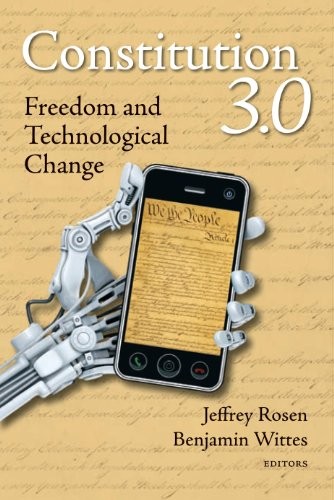
Constitution 3.0: Freedom and Technological Change
0
0
As an Amazon Associate and affiliate partner, Menrva Books earns from qualifying purchases. Learn more
Author Description
Author description coming soon. We're reaching out to them in the ether...
Menrva's Summary
THE THESIS
The book investigates how the U.S. Constitution, a document conceived in an analog age, can adapt to the digital revolution. Jeffrey Rosen, a legal affairs editor at The New Republic, examines the challenges posed by new technologies like the internet, social media, and surveillance to fundamental rights such as privacy, free speech, and due process. He explores historical precedents and proposes potential constitutional frameworks to safeguard liberty in an era of unprecedented technological change, arguing that the Constitution's enduring principles must be reinterpreted to address contemporary threats.
THE SCOPE MAP
- Analysis of the historical evolution of constitutional rights in response to technological shifts.
- Examination of privacy concerns in the digital age, including government surveillance and data collection.
- Discussion of free speech implications in online environments and the regulation of digital platforms.
- Exploration of due process and the challenges of applying legal standards to cybercrime and online interactions.
- Consideration of the role of the judiciary and legislative branches in adapting constitutional law to new technologies.
- Proposals for constitutional amendments or reinterpretation to address modern technological challenges.
- Case studies of landmark legal battles and technological advancements that have shaped constitutional interpretation.
THE AUTHORITY PERSPECTIVE
Jeffrey Rosen's 'Constitution 3.0' is recognized for its timely exploration of how foundational legal principles grapple with rapid technological advancement. Critics have noted its comprehensive analysis of privacy, free speech, and due process in the digital age, highlighting Rosen's ability to connect historical constitutionalism with contemporary challenges. The book is generally regarded as an insightful and accessible examination of the legal and ethical questions arising from the internet and surveillance technologies. It is seen as a valuable contribution to discussions on safeguarding civil liberties in an increasingly digitized world.
Page Count:
284
Publication Date:
2011-01-01
ISBN-10:
0815722133
ISBN-13:
9780815722137
Non-Fiction
Politics
Science & Technology
Science
Technology
Social Science
Law
Community Tags
Similar Books