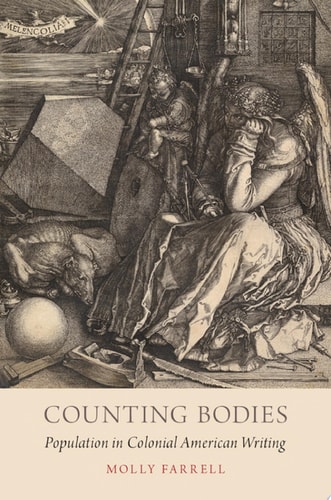
Counting Bodies
0
0
As an Amazon Associate and affiliate partner, Menrva Books earns from qualifying purchases. Learn more
Author Description
Quantifiable Citizenship In The Form Of Birth Certificates, Census Forms, And Immigration Quotas Is So Ubiquitous That Today It Appears Ahistorical. Yet Before The Modern Colonial Era, There Was Neither A Word For Population In The Sense Of Numbers Of People, Nor Agreement That Monarchs Should Count Their Subjects. Much Of The Work Of Naturalizing The View That People Can Be Represented As Populations Took Place Far Outside Government Institutions And Philosophical Treatises. It Occurred Instead In The Work Of Colonial Writers Who Found In The Act Of Counting A Way To Imagine Fixed Boundaries Between Intermingling Groups. Counting Bodies Explores The Imaginative, Personal, And Narrative Writings That Performed The Cultural Work Of Normalizing The Enumeration Of Bodies. By Repositioning And Unearthing A Literary Pre-history Of Population Science, The Book Shows That Representing Individuals As Numbers Was A Central Element Of Colonial Projects. Early Colonial Writings That Describe Routine And Even Intimate Interactions Offer A Window Into The Way People Wove The Quantifiable Forms Of Subjectivity Made Available By Population Counts Into Everyday Life. Whether Trying To Make Sense Of Plantation Slavery, Frontier Warfare, Rapid Migration, Or Global Commerce, Writers Framed Questions About Human Relationships Across Different Cultures And Generations In Terms Of Population.
Menrva's Summary
THE THESIS
This book investigates how early colonial literature functioned as a primary mechanism for normalizing the quantification of human populations. Author Molly Farrell, a scholar of early American literature, argues that the concept of 'population' as a numerical entity was not a natural evolution of governance but a construct developed through narrative and imaginative writing. By analyzing colonial texts, she demonstrates how writers used enumeration to establish boundaries and define subjectivity during the expansion of colonial projects.
THE SCOPE MAP
What You Will Find
- Analysis of colonial literary texts including journals, letters, and narratives.
- Examination of the intersection between population science and colonial expansion.
- Exploration of how quantifiable subjectivity influenced perceptions of slavery, warfare, and migration.
Scope Limits
- The text focuses primarily on the colonial era and does not provide a comprehensive history of modern demographic statistics.
- It does not cover post-colonial or contemporary statistical methodologies in depth.
THE AUTHORITY PERSPECTIVE
Scholars in the field of early American studies recognize this work as a significant contribution to understanding the cultural origins of demographic thought. Readers frequently note the academic density of the prose and the author's meticulous archival research.
Page Count:
272
Publication Date:
2016-01-01
Publisher:
Oxford University Press
ISBN-10:
0190277327
ISBN-13:
9780190277321
History
Sociology
Literary Criticism
Community Tags
Similar Books