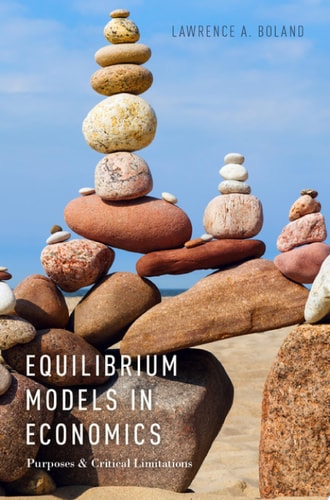
Equilibrium Models In Economics
0
0
As an Amazon Associate and affiliate partner, Menrva Books earns from qualifying purchases. Learn more
Author Description
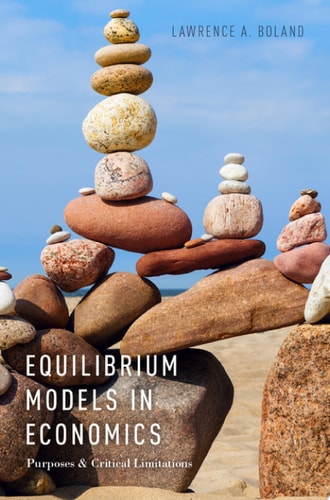
The Concept Of Equilibrium Is Fundamental To Economic Theory, According To Which, It Exists When Supply And Demand Are Balanced. Equilibrium Models In Economics Critically Examines The Major Problematic Assumptions Employed To Build Equilibrium Models. It Gives Particular Attention To The Assumptions Used To Characterize Learning, Knowledge And Expectations. Lawrence Boland Here Explores Whether Equilibrium Models Can Provide A Realistic Explanation Of Economic Events And Objects Such As Prices, Market Demands And Market Supplies. He Traces How The Different Perspectives On Equilibrium Models Represented By Such Creators As Kenneth Arrow, Robert Clower, And George Richardson Influenced Subsequent Developments In Economics. A Key Debate Is About The Comparative Importance Of Whether Equilibrium Refers To A State Of An Actual Economy Or A Property Of A Formal Mathematical Model. Another Is The Extent That The Distinction Between A Model's Exogenous Vs. Endogenous Variables Involves Causality. Also Explored Are More Recent Efforts Provided By Behavioral, Evolutionary, And Complexity Economics-whether They Might Change How Economics Is Practiced In The Future And How They Could. Equilibrium Models In Economics Is A Trenchant Exploration Of How The Discipline Has Grappled With Attempts To Understand And Explain The Way Information, Knowledge, And The Expectations Of Actors Participating In The Economy Influence Outcomes And Behavior. It Presents A Realistic, Workable Theory Of Knowledge And Learning, Simulating How Decision Makers And Other Actors Operate In Fast-changing Equilibrium Conditions.
Menrva's Summary
THE THESIS
This book investigates whether equilibrium models can provide a realistic explanation of economic events and objects such as prices, market demands, and market supplies. Lawrence A. Boland, a noted scholar in economic methodology, examines the problematic assumptions inherent in building these models. He focuses specifically on how economists characterize learning, knowledge, and expectations, while tracing the influence of key figures like Kenneth Arrow and Robert Clower on the evolution of the discipline.
THE SCOPE MAP
What You Will Find
- Analysis of the distinction between equilibrium as an actual state versus a formal mathematical property
- Exploration of exogenous versus endogenous variables and their relationship to causality
- Review of contributions from behavioral, evolutionary, and complexity economics
- Examination of how information and actor expectations influence economic outcomes
Scope Limits
- The text does not provide a comprehensive history of all economic thought, focusing instead on the specific methodology of equilibrium modeling
- It does not offer a predictive manual for market trading but rather a critical analysis of theoretical frameworks
THE AUTHORITY PERSPECTIVE
Experts and academics recognize this work as a rigorous critique of the foundational assumptions within neoclassical economics. Readers frequently note the high level of technical and philosophical density, making it a specialized resource for students and researchers interested in economic methodology.
Page Count:
200
Publication Date:
2017-01-01
Publisher:
Oxford University Press
ISBN-10:
0190274344
ISBN-13:
9780190274344
Economics
Methodology
Economic Theory
Evolutionary Economics
Community Tags
Similar Books