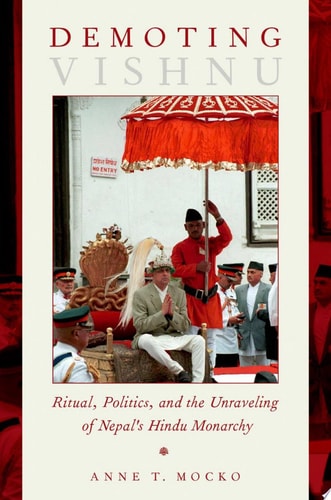
Demoting Vishnu
0
0
As an Amazon Associate and affiliate partner, Menrva Books earns from qualifying purchases. Learn more
Author Description
At The Turn Of The Millennium, Nepal Was The World's Last Remaining Hindu Kingdom. Even The Most Skeptical Of Observers Could Hardly Imagine That The Institution Of The Monarchy Could Soon Be In Jeopardy. In 2001, However, Nepal's Popular King Birendra Was Killed In The Royal Palace. Though The Crown Passed To His Brother Gyanendra, The Monarchy Would Never Fully Recover. Nepal Witnessed An Anti-king Uprising In April 2006 And Over The Course Of Two Years, An Interim Administration Systematically Took Over All The King's Duties And Privileges. Most Decisively, Beginning In The Summer Of 2007 The Government Began Blocking The King From Participating In His Many Public Rituals, Sending The Prime Minister In His Place Instead. Demoting Vishnu Argues That Nepal's Dramatic Political Transformation From Monarchy To Republic Was Contested-and In Key Ways Accomplished-through Ritual Performance. Mocko Theorizes The Role Of Public Ritual In Producing Nepal's State Ideology. She Examines How Royal Ritual Once Authorized Kings To Serve As The Privileged Apex Of National Governance And Shows How In The Twenty-first Century Those Rituals Stopped Serving The King And Began Instead To Authorize Rule By A Party-based Head Of State. By Co-opting State Ritual, The King's Opponents Were Able To Attack The Monarchy's Social Identity At Its Foundations, Enabling The Final Legal Dissolution Of Kingship In 2008 To Take Place Without Physically Harming The King Himself. All Once-royal Rituals Continue To Be Performed, But Now They Are Handled By The Country's President-a Position Created In 2008 To Take Over State Ceremonial Functions. Demoting Vishnu Illustrates How Upheaval In Ritual Contexts Undermined The Institutional Logic Of The Monarchy By Demonstrating In Very Public Ways That Kingship Was Contingent, Opposable, And Ultimately Dispensable.
Menrva's Summary
THE THESIS
How did the systematic appropriation of royal ritual facilitate the transition of Nepal from a Hindu monarchy to a secular republic? Anne T. Mocko, an expert in religious studies and South Asian politics, utilizes ethnographic research and historical analysis to argue that the dissolution of the Nepalese monarchy was achieved through the strategic co-option of state ceremonies. She posits that by replacing the King with government officials in public rituals, political actors successfully dismantled the ideological foundation of kingship, rendering the institution dispensable before its formal legal abolition.
THE SCOPE MAP
What You Will Find
- Analysis of the transition from the Shah dynasty to a republican state structure.
- Examination of specific public rituals and their role in state ideology.
- Documentation of the 2001 royal palace massacre and the subsequent 2006-2008 political shifts.
- Theoretical framework regarding the performative nature of political authority.
Scope Limits
- The text does not provide a comprehensive military history of the Nepalese Civil War.
- It does not focus on the personal lives of the royal family beyond their ceremonial functions.
THE AUTHORITY PERSPECTIVE
Scholars in the field of South Asian studies recognize this work as a significant contribution to the understanding of political ritual and state formation. Readers frequently note the academic density of the prose, which provides a rigorous examination of how symbolic actions influence institutional legitimacy.
Page Count:
304
Publication Date:
2015-01-01
Publisher:
Oxford University Press
ISBN-10:
0190275235
ISBN-13:
9780190275235
History
Religion
Nepal
Anthropology
Monarchy
Community Tags
Similar Books