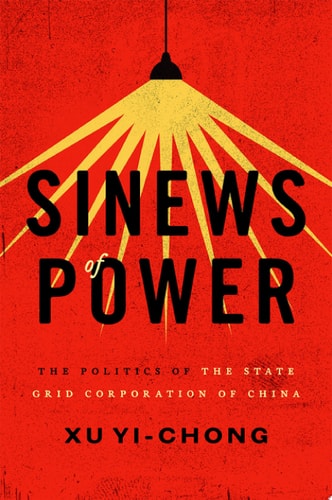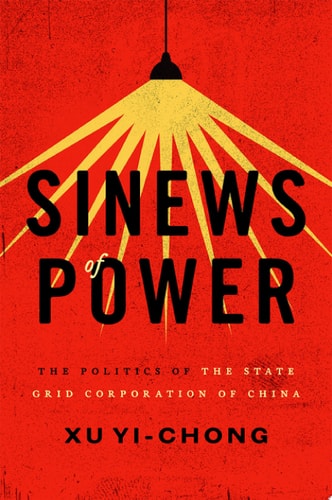
Sinews of Power
0
0
As an Amazon Associate and affiliate partner, Menrva Books earns from qualifying purchases. Learn more
Author Description
Electricity Is A Basic Requirement For A Modern Economy, And Transmission Grids At The Center Of Transition To A Low-carbon Power System. They Are The Principal Means To Integrate Large Shares Of Wind And Solar Power And They Are Essential To Ensuring A Secure And Reliable Electricity Supply. Grid Companies Around The World Are Struggling To Find Their Niche In This Transition. The State Grid Corporation Of China (sgcc) Is One Of The Principal Players In This Round Of Global Competition. Central State-owned Enterprise (soes), Such As Sgcc, Continue To Hold The 'commanding Heights' Of The Chinese Economy. Their Relationship With The Party-state Is Crucial To Understanding The Questions Of Whether Soes Take Orders From, And Do The Bidding Of, The Chinese Communist Party, And How They Operate Under The State Ownership And With A Wide Range Of Operational Autonomy And Expectation That They Are Profit-maximazing Corporations. This Book Examines The Origin, Development And Expansion Of Sgcc, The World's Largest Utility Company And The 7th Largest Corporation. By Telling Both The Electricity Story And The Soe Story, It Provides Insights Into The Challenges Facing The Grids And Their Possible Futures. It Challenges The Orthodox Account Of Chinese Politics That Portrays Soes As Little More Than Puppets, Jumping To Every Demand Of The Party-state. It Shows That Sgcc Has Been Built Into A Modern Corporation By Entrepreneurial Managers. By Extending Its Operation To Four Continents, Sgcc Is Now A Global Player, Competing With Its Peers And Also Having Its Input In The Future Low-carbon Electricity System. This Book Challenges The Popular Interpretation Of Chinese Government. Piling Detail On Detail, It Provides A Comprehensive Picture Of Chinese Political Economy That Is Both New And Utterly Convincing.
Menrva's Summary
THE THESIS
This book investigates the complex relationship between the State Grid Corporation of China (SGCC) and the Chinese party-state to determine how a state-owned enterprise balances political directives with corporate autonomy. Author Xu Yi-chong utilizes extensive research into the development of the world's largest utility company to challenge the conventional view that state-owned enterprises function merely as passive instruments of the government. By analyzing the operational history and global expansion of the SGCC, the book argues that entrepreneurial management and corporate strategy play a significant role in the firm's trajectory within the global energy market.
THE SCOPE MAP
What You Will Find
- Historical analysis of the origin and growth of the State Grid Corporation of China.
- Examination of the intersection between low-carbon energy transitions and grid infrastructure.
- Case studies of SGCC's international operations across four continents.
- Theoretical framework regarding the autonomy of state-owned enterprises in China.
Scope Limits
- The text does not provide a technical manual for electrical engineering or grid maintenance.
- It does not offer a comprehensive biography of individual corporate executives.
THE AUTHORITY PERSPECTIVE
Experts recognize this work as a significant contribution to the study of Chinese political economy and the governance of state-owned enterprises. Readers frequently note the detailed empirical evidence provided, which serves to complicate and nuance standard academic interpretations of Chinese state capitalism.
Page Count:
240
Publication Date:
2016-01-01
Publisher:
Oxford University Press
ISBN-10:
0190279532
ISBN-13:
9780190279530
Energy policy
International relations
Business History
China Studies
Community Tags
Similar Books