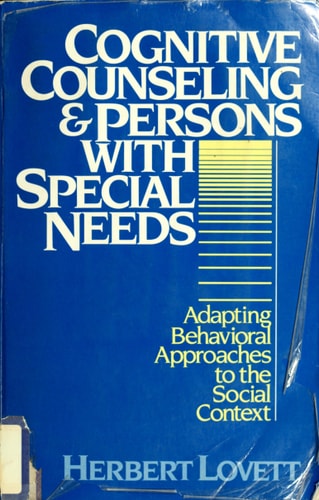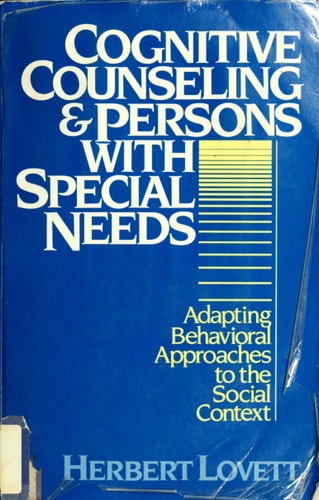
Cognitive counseling and persons with special needs: Adapting behavioral approaches to the social context
0
0
As an Amazon Associate and affiliate partner, Menrva Books earns from qualifying purchases. Learn more
Author Description
This is a valuable book for supervisory level personnel who can establish policy and who will be in a position to influence others who work directly with the persons with special needs. Contemporary Psychology Far too often behavioral principles--sound enough in themselves--are applied without taking individual needs and tastes into account. Such programs either fail to change the behavior or they draw counselor and patient--teacher and student--parent and child into deeper conflict. Cognitive Counseling and Persons with Special Needs describes the effective and humane use of behavioral methods to teach social and cognitive skills to the severely and profoundly mentally retarded. This introduction and guidebook outlines general principles and offers many case studies to illustrate the concepts under discussion.
Menrva's Summary
THE THESIS
How can behavioral principles be adapted to effectively and humanely address the cognitive and social needs of individuals with severe developmental disabilities? Herbert Lovett, an expert in behavioral intervention, argues that traditional behavioral approaches often fail when they ignore the unique tastes and individual requirements of the patient. The book presents a framework for integrating cognitive counseling techniques into standard behavioral programs to foster more meaningful skill acquisition and reduce conflict between caregivers and individuals with special needs.
THE SCOPE MAP
What You Will Find
- Principles of cognitive counseling adapted for individuals with profound intellectual disabilities
- Strategies for aligning behavioral interventions with individual preferences
- Case studies illustrating the practical application of social and cognitive skill training
- Guidelines for supervisory personnel to influence institutional policy
Scope Limits
- The text focuses primarily on severe and profound mental retardation and may not address mild cognitive impairments or other neurodivergent conditions in depth.
THE AUTHORITY PERSPECTIVE
Critics and professionals in the field of psychology recognize this work as a practical guide for bridging the gap between rigid behavioral modification and person-centered care. Readers frequently note that the book serves as a foundational resource for supervisors and educators seeking to implement more humane and effective intervention strategies.
Page Count:
149
Publication Date:
1985-01-01
Publisher:
Praeger
ISBN-10:
0030004888
ISBN-13:
9780030004889
Psychology
Special Education
Counseling
Behavioral Therapy
Counseling Psychology
Community Tags
Similar Books