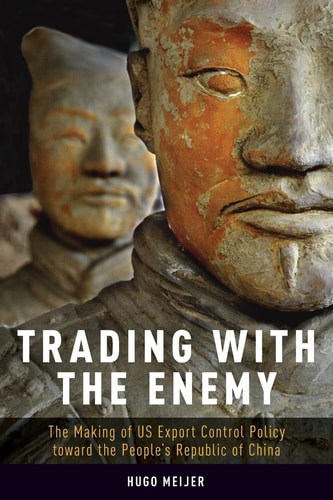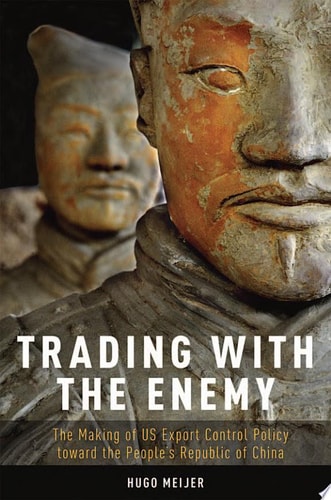
Trading With The Enemy
0
0
As an Amazon Associate and affiliate partner, Menrva Books earns from qualifying purchases. Learn more
Author Description
In Light Of The Intertwining Logics Of Military Competition And Economic Interdependence At Play In Us-china Relations, Trading With The Enemy Examines How The United States Has Balanced Its Potentially Conflicting National Security And Economic Interests In Its Relationship With The People's Republic Of China (prc). To Do So, Hugo Meijer Investigates A Strategically Sensitive Yet Under-explored Facet Of Us-china Relations: The Making Of American Export Control Policy On Military-related Technology Transfers To China Since 1979. Trading With The Enemy Is The First Monograph On This Dimension Of The Us-china Relationship In The Post-cold War. Based On 199 Interviews, Declassified Documents, And Diplomatic Cables Leaked By Wikileaks, Two Major Findings Emerge From This Book. First, The Us Is No Longer Able To Apply A Strategy Of Military/technology Containment Of China In The Same Way It Did With The Soviet Union During The Cold War. This Is Because Of The Erosion Of Its Capacity To Restrict The Transfer Of Military-related Technology To The Prc. Secondly, A Growing Number Of Actors In Washington Have Reassessed The Nexus Between National Security And Economic Interests At Stake In The Us-china Relationship - By Moving Beyond The Cold War Trade-off Between The Two - In Order To Maintain American Military Preeminence Vis-à-vis Its Strategic Rivals. By Focusing On How States Manage The Heterogeneous And Potentially Competing Security And Economic Interests At Stake In A Bilateral Relationship, This Book Seeks To Shed Light On The Evolving Character Of Interstate Rivalry In A Globalized Economy, Where Rivals In The Military Realm Are Also Economically Interdependent.
Menrva's Summary
THE THESIS
How does the United States manage the inherent tension between national security requirements and economic interdependence when formulating export control policies toward China? Hugo Meijer, a scholar of international security, utilizes a framework of statecraft to analyze the evolution of American export controls on military-related technology transfers since 1979. By synthesizing extensive primary source data, the author argues that the traditional Cold War model of containment is no longer viable due to the erosion of American capacity to restrict technology flows and a shifting internal consensus regarding the nexus of security and commerce.
THE SCOPE MAP
What You Will Find
- Analysis of American export control policy regarding military-related technology transfers to the PRC from 1979 to the present.
- A comparative framework contrasting Cold War containment strategies with contemporary globalized economic realities.
- Empirical evidence derived from 199 expert interviews, declassified government documents, and diplomatic cables.
Scope Limits
- The study focuses primarily on the American policy-making process rather than the internal political dynamics within the Chinese government.
- The analysis is restricted to military-related technology transfers and does not cover broader trade or consumer goods sectors.
THE AUTHORITY PERSPECTIVE
Experts identify this work as a significant contribution to the study of economic statecraft and the complexities of modern interstate rivalry. Readers frequently note the high density of the prose and the rigorous reliance on primary source documentation to support the author's conclusions.
Page Count:
288
Publication Date:
2016-01-01
Publisher:
Oxford University Press
ISBN-10:
019027770X
ISBN-13:
9780190277703
Economics
US-China Relations
Military History
International relations
Foreign Policy
Community Tags
Similar Books