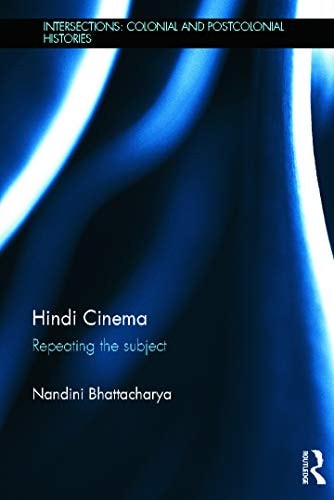
Hindi Cinema: Repeating the Subject
0
0
As an Amazon Associate and affiliate partner, Menrva Books earns from qualifying purchases. Learn more
Author Description
Hindi Cinema is full of instances of repetition of themes, narratives, plots and characters. By looking at 60 years of Hindi cinema, this book focuses on the phenomenon as a crucial thematic and formal code that is problematic when representing the national and cinematic subject. It reflects on the cinema as motivated by an ongoing crisis of self-formation in modern India. The book looks at how cinema presents liminal and counter-modern identities emerging within repeated modern attempts to re-enact traumatic national events so as to redeem the past and restore a normative structure to happenings. Establishing structure and event as paradigmatic poles of a historical and anthropological spectrum for the individual in society, the book goes on to discuss cinematic portrayals of violence, gender embodiment, religion, economic transformations and new globalised Indianness as events and sites of liminality disrupting structural aspirations. After revealing the impossibility of accurate representation of incommensurable and liminal subjects within the historiography of the nation-state, the book highlights how Hindi cinema as an ongoing engagement with the nation-state as a site of eventfulness draws attention to the problematic nature of the thematic of nation. It is a useful study for academics of Film Studies and South Asian Culture
Menrva's Summary
THE THESIS
How does the persistent repetition of themes, narratives, and characters in Hindi cinema reflect the ongoing crisis of self-formation in modern India? Nandini Bhattacharya examines six decades of cinematic output to argue that repetition functions as a formal code used to navigate traumatic national events and the struggle for identity. By analyzing the tension between structural aspirations and historical events, the author explores how cinema attempts to reconcile the past while grappling with the complexities of the modern nation-state.
THE SCOPE MAP
What You Will Find
- A sixty-year longitudinal analysis of Hindi film narratives and character archetypes.
- A theoretical framework contrasting structural stability with the disruptive nature of historical events.
- Examination of themes including gender embodiment, religious identity, and economic globalization.
- Critical inquiry into the representation of liminal and counter-modern identities within the context of the Indian nation-state.
THE AUTHORITY PERSPECTIVE
Scholars of South Asian culture and film studies identify this work as a rigorous exploration of the intersection between national history and cinematic representation. The text is noted for its dense, academic prose that requires a foundational understanding of post-colonial theory and film criticism.
Page Count:
219
Publication Date:
2012-01-01
Publisher:
Routledge
ISBN-10:
0203084179
ISBN-13:
9780203084175
History
Motion pictures
Sociology
Film Studies
Cinema
Asian Studies
Community Tags
Similar Books