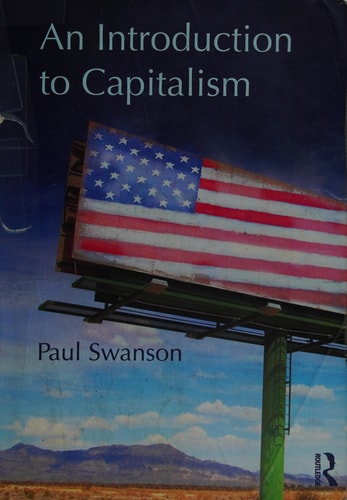
An introduction to capitalism
0
0
As an Amazon Associate and affiliate partner, Menrva Books earns from qualifying purchases. Learn more
Author Description
Embedded In An Historical Account Of The Development Of U.s. Capitalism Up To The Present Day, This Book Gives The Reader A Thorough Description Of The Major Aspects Of The U.s. Economy, As Well As A Theoretical Understanding Of The Overall Economy. A Particular Focus Of This Book Is How Free Markets Work In Capitalism And The Interrelationship Between Markets And The Government. Of Particular Interest In The Current Economic Situation Is The Question Of What Can The Government Do To Get The Economy Going Again. Underlying The Standard Economics Text Today Is The Fundamental Belief That Leaving Markets As Free As Possible Will Lead To The Ideal Economy. Directly Opposing This Approach, This Book Takes A Critical Stance Toward Free Markets. Rather Than Viewing Markets As The Ideal Solution To Almost All Economic Problems, This Book Argues That Markets Are Not Always The Answer. On The Contrary, They Are Often The Problem, And Must Be Corrected By Government Action. Related To This Critical Stance, And In A Further Departure From Current Economics Texts, This Book Takes An Explicitly Keynesian Approach To The Macro-economy. Rejecting The Free Market Approach Which Dominates Both Micro- And Macro-economics Today, This Book Offers A Fresh Perspective On Economics And The Economy Today.
Menrva's Summary
THE THESIS
This book investigates whether free market mechanisms are inherently sufficient for economic stability or if they require consistent government intervention to function effectively. Paul Swanson challenges the prevailing orthodoxy of contemporary economics textbooks, which often prioritize laissez-faire principles. By grounding his analysis in the historical development of the United States economy, the author constructs a framework rooted in Keynesian theory to argue that market failures are frequent and necessitate active state correction.
THE SCOPE MAP
What You Will Find
- Historical analysis of the evolution of the United States economic system.
- Theoretical examination of the relationship between free markets and government policy.
- Critical evaluation of standard microeconomic and macroeconomic models.
- Keynesian perspectives on addressing contemporary economic stagnation and instability.
THE AUTHORITY PERSPECTIVE
This text is noted for its explicit departure from mainstream neoclassical economic instruction, offering a distinct ideological alternative for students and observers of policy. Readers frequently highlight the book's utility as a counter-narrative to standard market-centric curricula, though they note the prose requires a foundational understanding of economic terminology.
Page Count:
448
Publication Date:
2012-01-01
Publisher:
Routledge
ISBN-10:
0203100328
ISBN-13:
9780203100325
History
Economics
Business
Fiscal Policy
Labor Market
Capitalism
Macroeconomics
Community Tags
Similar Books