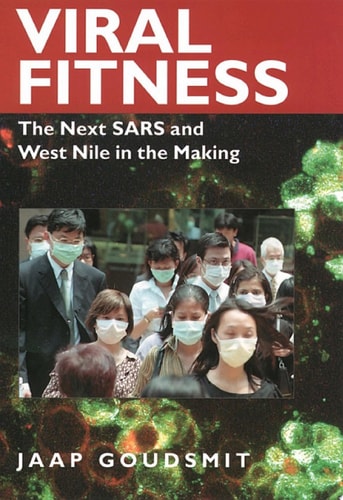
Viral Fitness: The Next SARS and West Nile in the Making
0
0
As an Amazon Associate and affiliate partner, Menrva Books earns from qualifying purchases. Learn more
Author Description
Despite vaccines and medicines, we have not succeeded in eradicating the most poisonous viruses in the world, like jaundice, measles, diarrhea, polio, and AIDS, not to mention newcomers like West Nile and SARS. Also, since September 11, it is no longer unthinkable that a terrorist would intentionally spread a virus among people or the food chain. In this book, Jaap Goudsmit argues that there is no such thing as life without viruses for many reasons; including the fact that many viruses spread without any visible signs, and can hide in animals; that there are too many different species of viruses and they multiply much faster than any animal or plant; and that infections strike especially in areas where life is difficult enough already, such as Africa and Asia. However, Goudsmit continues, if viruses hold onto life so stubbornly, perhaps they can be useful to other living beings. Do viruses offer people a better chance of survival in a hostile world? Do viruses make people fitter? Some viruses seem to play a role in the process whereby our genes adapt to the environment. What is it that makes viruses incredibly strong, and can we learn something from it? What is the secret of the enormous "fitness" of viruses? Will viruses spell the end of mankind or will man always be able to offer resistance? This book attempts to answer these and other questions.
Menrva's Summary
THE THESIS
This book investigates the evolutionary resilience of viruses and questions whether their persistent presence in the biosphere poses an existential threat to humanity or offers potential biological advantages. Dr. Jaap Goudsmit, a specialist in virology, utilizes his extensive background in infectious disease research to analyze the rapid mutation rates and survival mechanisms of viral pathogens. He argues that the eradication of viruses is biologically improbable and proposes a framework for understanding how viral fitness interacts with human genetic adaptation.
THE SCOPE MAP
What You Will Find
- Analysis of viral transmission patterns in endemic regions like Africa and Asia
- Examination of the relationship between viral evolution and human genetic adaptation
- Discussion on the risks of bioterrorism and zoonotic spillover events
Scope Limits
- Does not provide a comprehensive clinical guide for treating specific viral infections
- Does not offer a detailed geopolitical strategy for global pandemic prevention
THE AUTHORITY PERSPECTIVE
Experts in the field of public health recognize this work as a provocative exploration of viral ecology that challenges traditional eradication-focused paradigms. Readers frequently note the accessible prose style, which balances complex biological concepts with broader philosophical questions regarding human survival.
Page Count:
202
Publication Date:
2004-01-01
Publisher:
Oxford University Press
ISBN-10:
019028479X
ISBN-13:
9780190284794
Science
Public Health
Virology
Epidemiology
Medical
Virus diseases
Evolutionary Biology
Allied Health
Community Tags
Similar Books