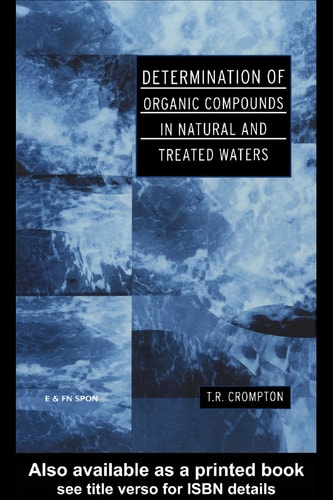
Determination of Organic Compounds in Natural and Treated Waters
0
0
As an Amazon Associate and affiliate partner, Menrva Books earns from qualifying purchases. Learn more
Author Description
The presence of concentrations of organic substances in water is a matter of increasing concern to the water industry, environmentalists, and the general public alike from the point of view of possible health hazards. This comprehensive reference draws together and systemises the vast body of information available on the occurrence and determination of organic substances in all types of non-saline and saline natural and treated waters.Determination of Organic Compounds in Natural and Treated Waters provides a comprehensive description of organic compounds in all natural and treated water types. To enable the user quick access to the relevant compound/water type, a series of tables facilitate rapid access to specific topics. The book opens with a brief discussion of current analytical techniques employed in the determination of organics in water. Methods are provided in broad outline, with the author providing guidance on their applicability, the advantages and disadvantages of one method when compared to another, possible interferences, sensitivity, and detection levels.This book is an essential reference for analytical chemists working in industry in the water utilities, those working in government and non-government organisations and regulatory agencies, chemical companies producing aqueous effluents, and for environmental and analytical consultants.
Menrva's Summary
THE THESIS
This text investigates the methodologies and analytical frameworks required to identify and quantify organic substances present in various natural and treated water systems. T. R. Crompton, an experienced chemist, synthesizes a vast body of technical data to address the growing concern regarding water safety and potential health hazards. The book provides a structured approach for professionals to evaluate the presence of organic compounds, balancing theoretical knowledge with practical laboratory application.
THE SCOPE MAP
What You Will Find
- Comprehensive analysis of organic compounds in both saline and non-saline water environments.
- Comparative evaluation of analytical techniques, including sensitivity, detection limits, and potential interferences.
- A series of reference tables designed for rapid identification of specific compounds and water types.
- Guidance on the selection of methodologies for industrial, regulatory, and environmental monitoring purposes.
THE AUTHORITY PERSPECTIVE
Experts and analytical chemists frequently identify this work as a foundational reference for those operating within water utilities and regulatory agencies. The text is noted for its technical density and its utility as a practical manual for professionals tasked with monitoring aqueous effluents.
Page Count:
884
Publication Date:
2003-01-01
Publisher:
Taylor & Francis Group Plc
ISBN-10:
0203139879
ISBN-13:
9780203139875
Non-Fiction
Science
Engineering
Technology
Chemistry
Nonfiction
Technology & Engineering
Analyse
Eau
Reference
Analysis
Water Supply
Water
Environmental
Water Quality
Community Tags
Similar Books