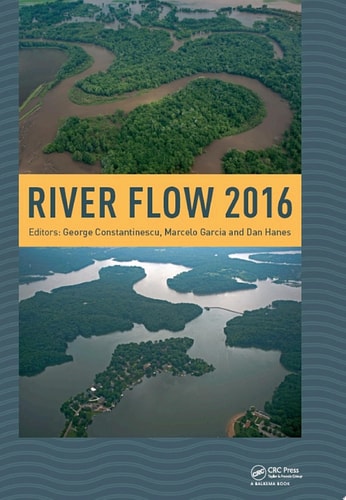
River Flow 2016
0
0
As an Amazon Associate and affiliate partner, Menrva Books earns from qualifying purchases. Learn more
Author Description
Understanding and being able to predict fluvial processes is one of the biggest challenges for hydraulics and environmental engineers, hydrologists and other scientists interested in preserving and restoring the diverse functions of rivers. The interactions among flow, turbulence, vegetation, macroinvertebrates and other organisms, as well as the transport and retention of particulate matter, have important consequences on the ecological health of rivers. Managing rivers in an ecologically friendly way is a major component of sustainable engineering design, maintenance and restoration of ecological habitats. To address these challenges, a major focus of River Flow 2016 was to highlight the latest advances in experimental, computational and theoretical approaches that can be used to deepen our understanding and capacity to predict flow and the associated fluid-driven ecological processes, anthropogenic influences, sediment transport and morphodynamic processes. River Flow 2016 was organized under the auspices of the Committee for Fluvial Hydraulics of the International Association for Hydro-Environment Engineering and Research (IAHR). Since its first edition in 2002, the River Flow conference series has become the main international event focusing on river hydrodynamics, sediment transport, river engineering and restoration. Some of the highlights of the 8th International Conference on Fluvial Hydraulics were to focus on inter-disciplinary research involving, among others, ecological and biological aspects relevant to river flows and processes and to emphasize broader themes dealing with river sustainability. River Flow 2016 contains the contributions presented during the regular sessions covering the main conference themes and the special sessions focusing on specific hot topics of river flow research, and will be of interest to academics interested in hydraulics, hydrology and environmental engineering.
Menrva's Summary
THE THESIS
Understanding and predicting fluvial processes presents a significant challenge for engineers and scientists focused on river health and restoration. The book addresses the complex interactions within river ecosystems, including flow, turbulence, biological elements, and sediment transport, all of which impact ecological well-being and sustainable management. It highlights the latest advancements in experimental, computational, and theoretical approaches aimed at improving our capacity to predict river flows and associated fluid-driven ecological processes, anthropogenic influences, and morphodynamic changes. The conference series, of which River Flow 2016 is a part, has become a primary international forum for river hydrodynamics, sediment transport, and river engineering.
THE SCOPE MAP
- Contributions on experimental, computational, and theoretical approaches to fluvial hydraulics.
- Focus on inter-disciplinary research involving ecological and biological aspects of river flows.
- Emphasis on broader themes related to river sustainability and management.
- Detailed examination of flow, turbulence, and their influence on riverine organisms.
- Analysis of sediment transport and morphodynamic processes in rivers.
- Discussions on anthropogenic influences on river systems.
- Insights into the challenges and solutions for preserving and restoring river functions.
- Coverage of regular and special sessions on hot topics in river flow research.
THE AUTHORITY PERSPECTIVE
The River Flow conference series, established in 2002, is recognized as a key international event for professionals in river hydrodynamics, sediment transport, and river engineering. River Flow 2016, as the 8th iteration, aimed to showcase cutting-edge research and foster inter-disciplinary collaboration. The proceedings likely offer valuable insights for academics and practitioners in hydraulics, hydrology, and environmental engineering seeking to deepen their understanding of complex river systems and promote sustainable practices. The focus on ecological and biological aspects alongside engineering challenges indicates a comprehensive approach to river management.
Page Count:
856
Publication Date:
2016-06-22
Publisher:
CRC Press
ISBN-10:
1317289110
ISBN-13:
9781317289111
Science & Technology
Non-Fiction
Ecology
Hydraulics
Hydrology
Community Tags
Similar Books