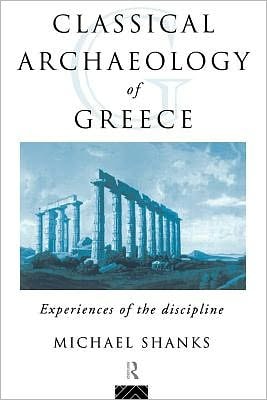
Classical Archaeology of Greece: Experiences of the Discipline
0
0
As an Amazon Associate and affiliate partner, Menrva Books earns from qualifying purchases. Learn more
Author Description
Archaeologists do not discover the past but take the fragmentary remains which they recover and make something of them. Archaeology is a process of detection and supposition; this is what makes it so fascinating. However, the interpretations of archaeologists differ and change over time. They depend upon the amount of evidence available, the ideas and preconceptions of the archaeologist and their interests and aims. Michael Shanks's enlivening work is a guide to the discipline of classical archaeology and its objects. It assesses archaeology as a means of reconstructing ancient Greek society using the latest approaches of social archaeology. In addition, The Classical Archaeology of Greece outlines the history of the discipline and discusses why Classical Greece continues to fascinate us and why it has had such an impact on European civilization and identity.
Menrva's Summary
THE THESIS
This book investigates the fundamental question of how archaeologists construct knowledge about the past through the interpretation of fragmentary material remains. Michael Shanks, a prominent scholar in archaeological theory, utilizes his expertise to challenge the notion of archaeology as a purely objective science. He argues that the discipline is a process of detection and supposition, heavily influenced by the contemporary interests, preconceptions, and social contexts of the researchers themselves.
THE SCOPE MAP
What You Will Find
- A critical history of the development of classical archaeology as a discipline.
- An application of social archaeology methodologies to the study of ancient Greek society.
- An analysis of the enduring influence of Classical Greece on European identity and civilization.
- A theoretical framework for understanding how material evidence is transformed into historical narrative.
THE AUTHORITY PERSPECTIVE
Scholars and students frequently cite this work as a foundational text for understanding the reflexive nature of archaeological practice. Readers often note the academic density of the prose, which serves as a rigorous introduction to the interpretive challenges inherent in the field.
Page Count:
214
Publication Date:
2003-01-01
Publisher:
Taylor & Francis Group
ISBN-10:
0203171977
ISBN-13:
9780203171974
History
Archaeology
Academic
Greece
Social Science
Community Tags
Similar Books