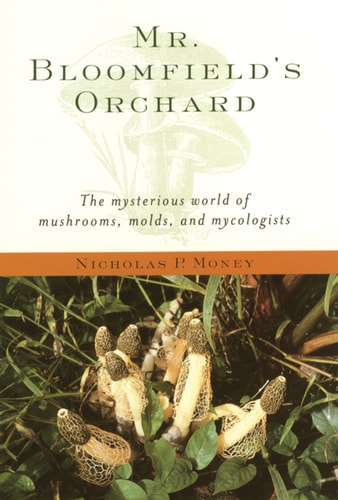
Mr. Bloomfield's Orchard: The Mysterious World of Mushrooms, Molds, and Mycologists
0
0
As an Amazon Associate and affiliate partner, Menrva Books earns from qualifying purchases. Learn more
Author Description
Stinkhorns, puffballs, the "corpse finder," deadly galerina, Satan's bolete, birch conks, black mold, the old man of the woods--the world of fungi is infinitely varied and not a little weird. Now, in Mr. Bloomfield's Orchard, Nicholas Money introduces readers to a dazzling array of fungi, from brewer's yeast and Penicillium to the highly lethal death cap. This is an entertaining book that also provides a solid introduction to the biology of fungi as well as much insight into how scientists study fungi in the lab and in the field. Readers will be intrigued by the many exotic fungi discussed. One fungus in Oregon, for instance, covers 2,000 acres and is now considered the world's largest organism. We learn of Madurella, which can erode bones until they look moth-eaten; Cordyceps, which wracks insects with convulsions, kills them, then sends a stalk out of the insect's head to release more infectious spores; and Claviceps, the poisonous ergot fungus, which causes hallucinations (the women charged with "demonic possession" in Salem in 1691 may have been victims of ergot consumption). Money also showcases the lives of famed mycologists--including Reginald Buller who wore horse blinders as he walked to work, the better to study luminescent fungi in his dark lab, and Charles Tulasne, the Audubon of fungi, whose illustrations of specimens border on art. And he recounts his own childhood introduction to fungi in Mr. Bloomfield's orchard, where trees and fruit were devoured by a rogue's gallery of bitter rot, canker, rust, powdery mildew, rubbery wood, and scab. Told with a refreshing sense of humor, Mr. Bloomfield's Orchard will fascinate anyone interested in the natural world.
Menrva's Summary
THE THESIS
How do the biological mechanisms, ecological impacts, and historical study of fungi shape our understanding of the natural world? Nicholas P. Money, a mycologist, utilizes his professional expertise to examine the diverse kingdom of fungi. By blending personal anecdotes with scientific observation, he argues that fungi are essential, complex, and often misunderstood organisms that influence everything from human health to global ecosystems.
THE SCOPE MAP
What You Will Find
- Biological classifications of various fungi including yeast, molds, and mushrooms
- Historical accounts of significant mycologists and their research methods
- Case studies on pathogenic fungi and their effects on insects and humans
- Ecological data regarding fungal growth and environmental interaction
Scope Limits
- Does not provide a comprehensive field guide for mushroom identification
- Does not focus on culinary or commercial mushroom cultivation techniques
THE AUTHORITY PERSPECTIVE
Experts and readers alike appreciate the accessible prose that balances scientific rigor with engaging storytelling. The text is frequently cited as a successful introduction to mycology for non-specialists who seek to understand the broader implications of fungal biology.
Page Count:
211
Publication Date:
2002-01-01
Publisher:
Oxford University Press
ISBN-10:
0190288582
ISBN-13:
9780190288587
History
Nature
Science
Natural History
Nature
Mycology
Fungi
Biology
Earth Sciences
Community Tags
Similar Books