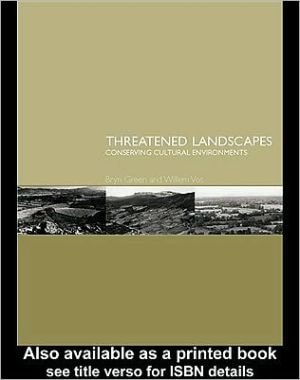
Threatened Landscapes: Conserving Cultural Environments
0
0
As an Amazon Associate and affiliate partner, Menrva Books earns from qualifying purchases. Learn more
Author Description
Few, if any, environments are free of human intervention. Often this generates ecosystems which are rich in biodiversity, historical interest, recreational opportunity and scenic beauty just as worthy of conservation as the more natural ecosystems on which protection programmes have been almost exclusively focussed. These 'cultural landscapes', ranging from the farm and forest lands of Europe and Eastern North America, through to the pasture lands and savannas of the Middle East and Africa to the paddylands of the Pacific Rim, are usually the product of relatively low-level, sustainable exploitation of the environment over long periods of time. Many have survived for centuries, if not millennia, but now urban expansion, depopulation of rural areas and, most damagingly, the intensification of agricultural and sylvicultural practices, are everywhere leading to a loss of their cherished biodiversity and amenity. Whilst past changes have mostly added to the valued characteristics of these landscapes, modern farming and forestry are creating sterile monocultures on the better land whilst marginal lands are being abandoned. This book documents these changes, illustrates them through detailed case studies of a representative selection of threatened landscapes, analyses their underlying causes and explores ways by which they can continue to be maintained, or new landscapes created which maintain their desired characteristics.
Menrva's Summary
THE THESIS
This book investigates the urgent need to protect cultural landscapes—environments shaped by long-term human interaction—which are currently threatened by modern agricultural intensification and rural abandonment. Authors Bryn Green and Willem Vos utilize their expertise in ecology and land management to argue that these human-modified ecosystems possess significant biodiversity and historical value comparable to strictly natural environments. The text provides a framework for understanding how sustainable historical practices are being replaced by sterile monocultures and offers strategies for future landscape maintenance.
THE SCOPE MAP
What You Will Find
- Global case studies covering European farmlands, African savannas, and Pacific Rim paddylands.
- Analysis of the socio-economic drivers behind rural depopulation and urban expansion.
- Comparative evaluation of traditional sustainable land use versus modern industrial intensification.
- Proposed methodologies for the conservation and creation of landscapes that balance human utility with ecological health.
THE AUTHORITY PERSPECTIVE
Experts recognize this work as a foundational text for understanding the intersection of human history and environmental conservation. Readers frequently note the clarity with which the authors bridge the gap between agricultural policy and ecological preservation.
Page Count:
184
Publication Date:
2003-01-01
Publisher:
Taylor & Francis Group
ISBN-10:
0203220897
ISBN-13:
9780203220894
Ecology
Geography
Agriculture
Land Use
Conservation
Nature conservation
Community Tags
Similar Books