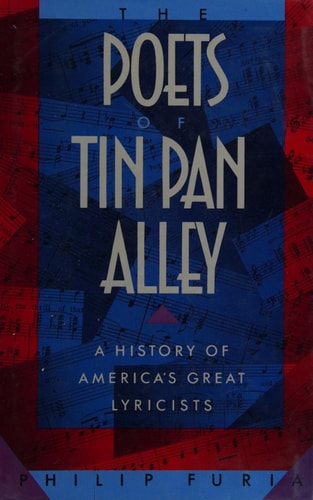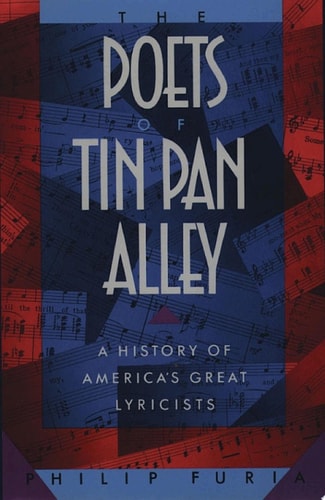
The Poets of Tin Pan Alley: A History of America's Great Lyricists
0
0
As an Amazon Associate and affiliate partner, Menrva Books earns from qualifying purchases. Learn more
Author Description
From the turn of the century to the 1960s, the songwriters of Tin Pan Alley dominated American music. Irving Berlin, Cole Porter, George and Ira Gershwin, Rodgers and Hart--even today these giants remain household names, their musicals regularly revived, their methods and styles analyzed and imitated, and their songs the bedrock of jazz and cabaret. In The Poets of Tin Pan Alley Philip Furia offers a unique new perspective on these great songwriters, showing how their poetic lyrics were as important as their brilliant music in shaping a golden age of American popular song. Furia writes with great perception and understanding as he explores the deft rhymes, inventive imagery, and witty solutions these songwriters used to breathe new life into rigidly established genres. He devotes full chapters to all the greats, including Irving Berlin, Lorenz Hart, Ira Gershwin, Cole Porter, Oscar Hammerstain II, Howard Dietz, E.Y. Harburg, Dorothy Fields, Leo Robin, and Johnny Mercer. Furia also offers a comprehensive survey of other lyricists who wrote for the sheet-music industry, Broadway, Hollywood, and Harlem nightclub revues. This was the era that produced The New Yorker, Don Marquis, Dorothy Parker, and E.B. White--and Furia places the lyrics firmly in this fascinating historical context. In these pages, the lyrics emerge as an important element of American modernism, as the lyricists, like the great modernist poets, took the American vernacular and made it sing.
Menrva's Summary
THE THESIS
This work investigates how the lyricists of the Tin Pan Alley era elevated popular song lyrics to a form of American modernism through technical innovation and poetic craft. Philip Furia, a scholar of American popular music, utilizes a biographical and analytical framework to examine the evolution of songwriting from the early 20th century through the 1960s. He argues that the lyrical contributions of figures like Cole Porter and Ira Gershwin were as vital to the development of American music as the melodies themselves, situating these writers within the broader context of American literary modernism.
THE SCOPE MAP
What You Will Find
- Detailed analysis of lyrical techniques including rhyme schemes, internal rhythm, and vernacular usage.
- Biographical chapters on major figures such as Irving Berlin, Lorenz Hart, and Dorothy Fields.
- Contextualization of songwriting within the rise of Broadway, Hollywood, and the sheet-music industry.
Scope Limits
- The text focuses primarily on the lyrical craft rather than the technical musicology or harmonic theory of the compositions.
- It does not provide an exhaustive discography or a complete history of the business side of the music industry.
THE AUTHORITY PERSPECTIVE
Critics and music historians frequently cite this work as a foundational text for understanding the literary merit of American popular song. Readers often note the accessible yet scholarly tone, which successfully bridges the gap between music appreciation and literary criticism.
Page Count:
330
Publication Date:
1992-01-01
Publisher:
Oxford University Press
ISBN-10:
0190281901
ISBN-13:
9780190281908
History
Biography
India
Humanities
Historical
Asia
Music History
Songwriting
Categories
Kindle eBooks
Kindle Store
American History